

Estimated reading time: 9 minutes
Key Findings
- This guide helps London residents choose reliable broadband by comparing the availability of national providers and local ‘alt-nets.’
- Understanding the difference between FTTC (‘Superfast’) and FTTP (‘Full Fibre’) is crucial for achieving optimal internet speeds.
- To avoid unexpected price hikes, renters should carefully review contracts and consider flexible terms like 12-month or rolling options.
- A 5-step checklist allows for a smooth provider switch, ensuring minimal disruption and avoiding double billing.
- Comparing real-world performance and using postcode checks leads to better-informed decisions regarding providers for London.
Contents
- Summary
- The ‘Full Fibre’ vs. ‘Superfast’ Breakdown: Why Your Connection Might Be Bottlenecked
- The Clash of the Titans: Choosing Between National Giants and London’s ‘Alt-nets’
- Avoiding the ‘April Price Trap’ and Finding Renter-Friendly Contracts
- The 5-Step London Broadband Checklist: How to Switch Without the Stress
- Q&A – Broadband Providers for London
Summary
This guide helps London residents choose the right broadband by focusing on real availability at your address, the critical FTTC (“Superfast”) vs FTTP (“Full Fibre”) difference, and the pros and cons of national providers versus local “alt-nets” with symmetrical speeds. It explains how to avoid CPI-linked “April Price Trap” bill increases, find renter-friendly contracts, and consider 5G home broadband as a flexible alternative. A 5-step checklist shows how to switch providers smoothly—matching household needs, verifying speeds by postcode, and coordinating installation and cancellation. The goal is reliable, cost-effective service tailored to your building’s infrastructure and your usage.
Sorting through endless flyers from competing London broadband providers often feels like a full-time job. Despite living in a global tech hub, you might still suffer frustrating Zoom freezes while your neighbour enjoys flawless video, simply because infrastructure varies dramatically from one street to the next. For a quick scan of internet providers for London residents actually use, start with a London ISP comparison and recent ISP service reviews.
Think of household bandwidth just like water pressure in a shared pipe. Companies measure this flow in Mbps (Megabits per second), but understanding the critical difference between those advertised numbers and your actual evening performance is vital when evaluating the internet providers for London residents can access. Across the ISP United Kingdom market, availability can shift block by block.
Consumer advocates recommend ignoring flashy billboard promises entirely. Securing true high-speed internet London or fast internet London ultimately comes down to checking local availability and knowing exactly what type of cables run directly to your specific building. If you are wondering who are the internet service providers for London actually serving your building, start with local coverage tools and a quick London ISP comparison.
The ‘Full Fibre’ vs. ‘Superfast’ Breakdown: Why Your Connection Might Be Bottlenecked
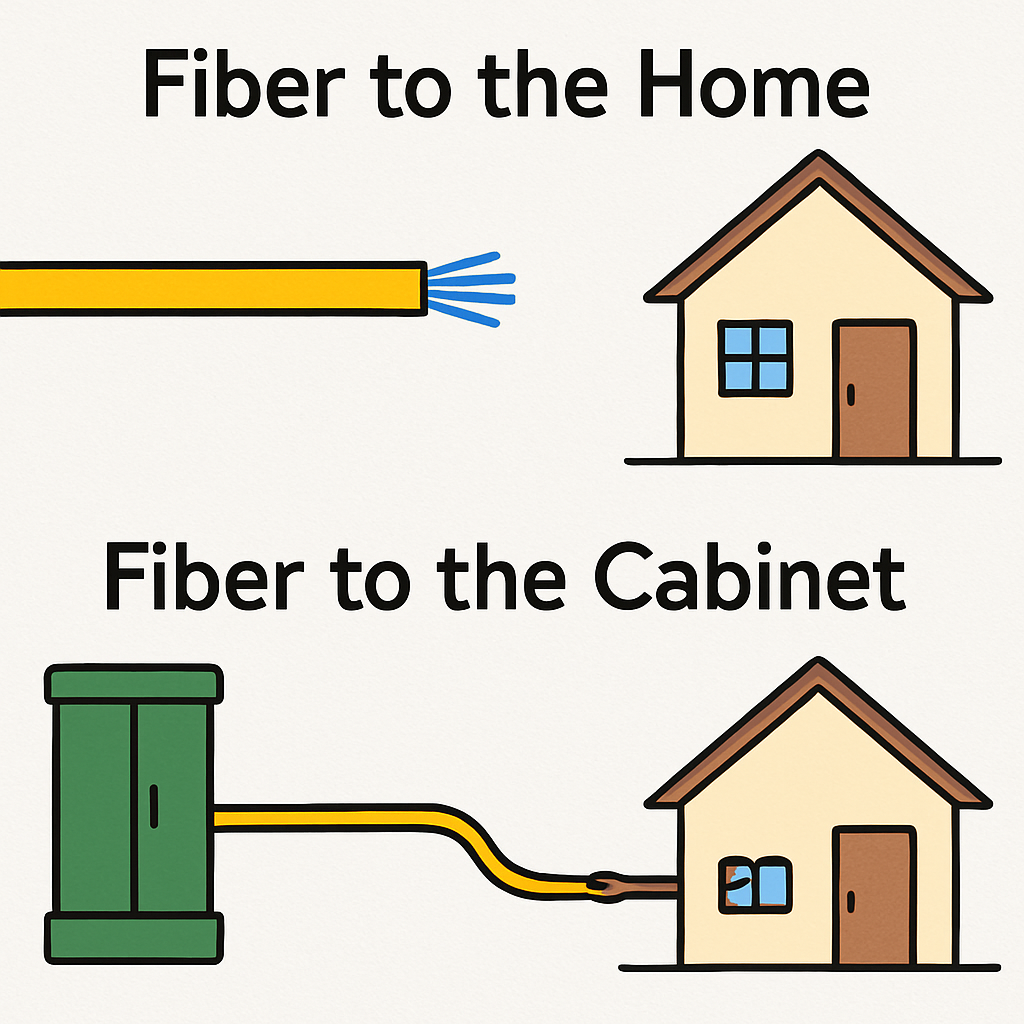
Living in a Victorian terrace shouldn’t mean dealing with 19th-century speeds. Many UK ISP providers and broadband London providers advertise “Superfast” broadband, which actually means Fibre to the Cabinet (FTTC). With this setup, the fast fibre-optic cable stops at your street’s green box, and the internet finishes its journey to your router through old copper telephone wires. Think of it like a sports car hitting a muddy dirt track right before your driveway— that copper bottleneck is exactly what causes those frustrating video drops.
Fixing this requires “Full Fibre,” officially known as Fibre to the Premises (FTTP). This brings the fast connection straight through your front door, unlocking the best fibre broadband deals London residents can get for true reliability. Shortlists of the best ISP UK options usually prioritise FTTP where available. Here is the difference:
- “Superfast” (FTTC): Uses copper for the final stretch; maxes out around 80Mbps.
- “Full Fibre” (FTTP): Fibre all the way; speeds effortlessly reach up to 1,000Mbps+.
Before making a switch, learning how to check broadband availability by postcode reveals if your building can actually support a fibre upgrade or if you are temporarily stuck with copper. For a neutral overview of what’s on offer, consult a list of ISP providers in UK from trusted industry sources.
The Clash of the Titans: Choosing Between National Giants and London’s ‘Alt-nets’
Between billboard ads for the best British ISP and hyper-local flyers piling up on your doormat, choosing a provider feels overwhelming. Major brands like BT and Sky actually share the exact same physical cables under London’s pavements. However, “Alt-nets” (Alternative Networks) like Hyperoptic dig their own independent tunnels directly to your building. This dedicated infrastructure means you aren’t sharing bandwidth with your entire street during the evening Netflix rush.
What really sets these local challengers apart is “Symmetrical Speeds”—meaning your upload speed is equally as fast as your download speed. If you regularly host home office video calls, a 500Mbps Alt-net connection prevents frozen screens far better than a standard 500Mbps national plan, which heavily caps upload power. Plus, checking Community Fibre coverage or the G.Network full fibre installation process often reveals significantly cheaper monthly rates for these superior speeds. Each internet company in UK may structure pricing and uploads differently, so compare any internet service provider on more than just the headline rate.
Weighing your options typically comes down to these trade-offs:
- Alt-nets (The Locals): Offer incredible speed value and flawless symmetrical connections, but availability is restricted to specific London postcodes or certain blocks of flats.
- National Giants: Provide vast, city-wide coverage and easy TV bundles, but generally charge higher prices for asymmetrical (slower upload) speeds.
Deciding between a bespoke local network and a familiar national powerhouse is only half the battle. Securing the actual deal is your next hurdle, especially when it comes to avoiding the ‘April Price Trap’ and finding renter-friendly contracts.
Avoiding the ‘April Price Trap’ and Finding Renter-Friendly Contracts
Budgeting in the capital is tricky without unexpected bill shocks, yet millions fall victim to the “April Price Trap.” While you might assume you are signing a truly fixed-term agreement, major providers usually embed CPI-linked price hikes into the small print. This means your bill automatically jumps every spring based on inflation plus an extra percentage. Over a 24-month contract, these annual leaps significantly inflate the true average monthly cost of high-speed London internet, easily turning a cheap £25 deal into a £30 burden by year two. An ISP service may include these clauses even when the marketing suggests prices are fixed.
Frequent moves make lengthy commitments incredibly frustrating for city dwellers. If you only plan to stay in your current flat for a year, a standard two-year deal practically guarantees hefty cancellation fees when you eventually pack up. Fortunately, challenger networks and broadband providers for London now champion short-term broadband contracts for London renters, providing flexible 12-month agreements or 30-day rolling plans that cancel effortlessly.
For those seeking ultimate flexibility, skipping cables entirely provides another fantastic plug-and-play solution. Although the reliability of 5G home broadband in London boroughs depends heavily on your flat’s physical proximity to a local mobile mast, this wireless alternative delivers an instant connection without waiting weeks for an engineer.
The 5-Step London Broadband Checklist: How to Switch Without the Stress
You no longer have to settle for freezing video calls or confusing contracts with guaranteed price hikes. Most Londoners don’t realise they can easily opt out of mid-contract increases by timing their switches effectively.
To execute a stress-free provider switch with broadband providers for London, use this simple checklist:
- Postcode check: Verify real-world speeds using postcode-specific tools for your exact address.
- Speed requirement audit: Match your household’s daily device count to the right bandwidth limit.
- Price hike check: Review your current terms to spot hidden mid-contract increases.
- Installation lead time: Plan your setup around the standard 14-day timeline for switching.
- Cancellation of old service: Coordinate your activation and end dates to avoid double-billing during the transition period.
Performing a comprehensive London ISP comparison ensures better long-term value than settling for a familiar billboard logo. Whether consulting a standard guide to switching broadband providers in the UK or browsing local ISP service reviews, starting with a simple postcode search reveals immediate local options. Securing reliable home internet ultimately requires matching available street-level infrastructure to your household’s actual daily bandwidth needs—and shortlisting the best ISP UK candidates / broadband providers for London and your address.
Q&A – Broadband Providers for London
Question: How do I find out what broadband I can actually get at my London address?
Start with postcode-specific availability tools and local coverage checkers for your exact building, then compare real evening speeds and technology type (FTTC vs FTTP) rather than headline ads. Look up both national providers and local “alt-nets” (e.g., Hyperoptic, Community Fibre, G.Network) to see who has infrastructure at your property, and scan recent broadband providers for London ISP comparisons and reviews to validate real-world performance.
Question: What’s the real difference between “Superfast” (FTTC) and “Full Fibre” (FTTP), and why does it matter?
FTTC brings fibre to the street cabinet but relies on old copper for the final stretch, which typically caps performance around 80Mbps and can bottleneck at busy times. FTTP runs fibre all the way into your home, delivering far more reliable, higher speeds—often up to 1,000Mbps+. If video calls freeze or streams buffer on FTTC, upgrading to FTTP (where available) usually fixes it.
Question: Should I choose a national provider or a London “alt-net”?
It depends on availability and priorities on the broadband providers for London:
- Alt-nets (locals): Build their own lines directly to buildings, offer symmetrical speeds (fast uploads and downloads) and strong value, but coverage is limited to specific postcodes/blocks.
- National giants: Broad city-wide coverage and easy TV bundles, but often pricier and with slower upload speeds (asymmetrical).
- If an alt-net serves your building and you care about video calls, cloud backups, or price-to-speed value, they’re often best. If you need bundles or alt-nets aren’t available, a national brand is the practical choice.
Question: How can I avoid the “April Price Trap” and what’s best if I’m renting?
Many “fixed” deals include CPI-linked rises each spring (inflation plus a margin), inflating costs over a 24‑month term. To dodge this:
- Read the small print for CPI clauses before signing.
- Prefer shorter terms (12‑month) or 30‑day rolling plans for flexibility.
- Time your switch so you’re not stuck when price rises hit.
- Consider 5G home broadband for plug‑and‑play flexibility if signal is strong at your flat; it avoids installation waits and suits short stays.
Question: How do I switch providers without downtime or double-billing?
Follow a simple 5‑step plan:
- Postcode check: Confirm actual FTTC/FTTP options and real speeds for your exact address.
- Speed audit: Match bandwidth to devices and usage (e.g., heavy video calls need stronger upload).
- Price-hike check: Review your current contract for CPI-linked increases and exit terms.
- Installation timing: Plan around a typical 14‑day switch window.
- Coordinate dates: Align your new activation and old cancellation to avoid overlap charges and gaps in service.
Related links
See how Broadband Freedom can help you, click here to check your postcode