


Updated: November 2026
Estimated reading time: 26 minutes
Key Takeaways
- Choose a 24-month deal if you plan to stay put. Longer contracts can cut monthly costs and may include useful rewards or equipment.
- Compare total contract cost, not introductory price. Include setup fees, delivery, annual price rises and cashback to find the genuine monthly equivalent.
- Check moving and cancellation terms before signing, especially if renting. Early exit fees can exceed £200, unless provider-specific relocation policies apply.
- Seek fixed-price deals where available for predictable bills. Pre-agreed annual rises shown in pounds and pence rarely give you a penalty-free exit.
- Record speed tests and fault reports if service fails. You must usually let the provider attempt repairs before escalating or leaving without fees.
Most UK households that choose 2-year broadband deals today will find that BT, Sky, Vodafone and Virgin Media use 24-month contracts as standard. In fact, a 24-month broadband contract often brings lower monthly broadband costs, but it also ties customers in for longer. This piece weighs twelve pros and cons of a 2-year broadband contract, from savings and bundled perks to exit fees and price rises.
Readers comparing the best 2-year broadband deals can also use broadbandfreedom.co.uk. Our site updates daily and lists offers from around 30 leading UK providers to help households find the right 24-month broadband deal.
1. Pro: Lower Monthly Broadband Costs for Households Staying Put
Lower Monthly Broadband Costs Explained
A 24-month broadband contract usually costs less each month than a shorter-term deal. Uswitch data from August 2026 shows average starting prices of £28.41 for full fibre (FTTP). It also shows £29.08 for Virgin Media cable. Part-fibre (FTTC) starts at £29.48. Mobile broadband starts at £16.15. Full-fibre prices have also fallen by 12% since August 2025. Providers reward longer commitments because they can plan revenue over two years rather than one. This is in part why shorter contracts cost more.
BT’s 12-month option costs more than its standard 24-month tariff.BeFibre charges about £4 more per month for a 12-month deal than for a 24-month one. Households that are happy to stay with one provider for two years usually benefit most from the lower rate.
Lower Monthly Broadband Costs: Household Effect
Households that do not plan to move within two years can make noticeable savings. MoneySavingExpert lists a 24-month deal at £22 a month with no stated price rises. It totals £528 over the full term, so the monthly cost remains exactly £22. Another listed deal starts at £18.50 a month, then rises to £22 and £25.50 during the contract. After deducting a £75 reward, its equivalent monthly cost is still £19.46. A £24 monthly deal with a £25 reward reduces the equivalent monthly cost to £22.96.
Households budgeting for broadband and other bills can save several pounds each month. Choose a 24-month broadband deal with a reward, not just the headline price.
Lower Monthly Broadband Costs: Costs and Terms to Check
Check several figures before committing to any of the best 2-year broadband deals. Confirm if the monthly price is fixed or will rise during the contract. Many 24-month deals go up by £3.50 to £4 a month later on. Check whether a cashback or voucher reward applies, as this reduces the total cost once deducted from the full 24-month spend.
The equivalent monthly cost also matters because it spreads all charges and rewards over the term. It gives a clearer figure than the advertised starting price alone. Comparing these figures side by side on broadbandfreedom.co.uk makes it easier to spot the cheapest 2-year broadband contract. It also helps you avoid choosing a deal just because it has the lowest starting price.

Image Source: i Newspaper
2. Con: A Two-Year Commitment Offers Less Flexibility for Renters
Renters face a specific problem when they sign a two-year broadband deal. Tenancy agreements rarely last as long as broadband contracts.
Reduced Flexibility for Renters Explained
Most new broadband connections now have an 18- or 24-month minimum term. The Renters’ Rights Act guarantees only one year before a landlord can ask a tenant to leave. This may happen if they want to sell or move back in. Tenants who know they will stay for the full term may avoid this issue, but most face a clear risk.
Toob.co.uk notes that many tenants sign 12-month tenancy agreements but become tied to 24-month broadband contracts. This issue often affects first-time renters, students, and people on temporary work contracts. Leaving before the minimum term often means you must pay an early termination charge. This is usually equal to the remaining contract value.
Reduced Flexibility for Renters: Household Effect
The provider’s policy largely determines what happens when a renter moves. Virgin Media works out exit fees based on the services you have. It also looks at your monthly cost and how many months are left in each minimum term. A bundle that includes TV and phone services can therefore lead to a higher bill than broadband alone.
Virgin Media refunds the fee if a renter moves to a UK address outside its network. The renter must provide valid proof of the new address within 30 days. Hyperoptic uses a different policy. Renters who move to another property in its network start a new contract without termination charges. Those who move outside the network must still pay the full fee. TalkTalk charges early termination fees for both broadband and TV services based on the remaining months.
Reduced Flexibility for Renters: Costs and Terms to Check
A provider’s moving-home terms matter as much as its monthly price, so renters should check them before they sign. The table below shows notice periods and transfer charges for several major providers:
| Provider | Minimum notice | Moving cost |
|---|---|---|
| BT | 2 weeks | Charges apply for new line or upgrades |
| EE | 3 weeks | Delivery charge for new equipment |
| Sky | 2 weeks | Free for VIP customers, else £50 |
| TalkTalk | 2 weeks | £60, or free with a re-contract |
| Virgin Media | 30 days | £20 to £35 transfer charge |
| Vodafone | 30 days | Free |
Renters who may not stay at the same address during a two-year broadband contract should check if the provider serves the new postcode. They should also check what evidence can waive fees and whether the new property requires a fresh 24-month broadband deal.
3. Pro: Included Equipment Can Reduce Upfront Spending

Image Source: broadbandswitch.co.uk
What a provider includes when you sign up can affect what a household pays before the first bill. This matters, beyond contract length and moving rules.
Included Equipment Explained
Many 2 year broadband deals include a router and installation at no extra cost. This makes switching more affordable at the start. Virgin Media’s QuickStart option has no setup fee and includes a free self-install kit at checkout. Customers only pay £30 if they choose an engineer visit when self-install was available.
Airband includes free installation and a WiFi 6 mesh router with all its fibre packages. Three’s home broadband deals have no setup fee, a 30-day moneyback guarantee and next-working-day hub delivery.
Most well-known providers waive router fees, although smaller local providers may still charge upfront.
Included Equipment: Household Impact
A household taking out a 24 month broadband contract can keep switching costs down from month one by avoiding router and installation fees. Airband says deals with no upfront costs offer an immediate saving, so new customers do not need extra cash when they sign up.
Uswitch highlights a trade-off worth knowing. BT, EE and Plusnet have each added upfront costs of up to £30. These costs mainly cover router production. Some rival providers absorb these costs into the monthly price. Delivery charges of £10 to £15 may still apply to send a router or TV box to the new address.
Included Equipment: Costs and Terms to Check
A few charges and terms are worth checking before you sign a 2 year broadband contract. Check whether an installation fee applies, as this is more common with a new line or full fibre connection and rarely exceeds £40. Also check if delivery costs are separate from the advertised price. Then find out what happens to the equipment when the contract ends. Virgin Media, Vodafone and The One Broadband treat routers and connection boxes as loaned equipment. They may charge a replacement or non-return fee if you do not return them.
Comparing these details with broadbandfreedom.co.uk’s listings for the best 2 year broadband deals helps you see the true upfront cost. It also helps you avoid relying only on the advertised monthly price.
4. Con: Installation and Delivery Charges May Still Apply

Image Source: broadbandswitch.co.uk
“Some broadband providers may occasionally add a small upfront charge to their deals to cover some of the costs of setting up your connection. However, many rarely make a case of adding them.” — Max Beckett, Broadband expert
A broadband package advertised as covering all equipment can still involve charges once connection work begins.
Installation and Delivery Charges Explained
A new landline installation costs around £140. Reactivating an inactive line costs £70. However, BT waives both fees if customers order broadband at the same time. Full fibre connections and house moves to another network often still require an engineer. As a result, Sky installations usually take two to three weeks from order to activation. Setup charges also differ widely between providers on a standard 24-month broadband contract:
| Provider | Setup fee | Notes |
|---|---|---|
| BT | £30 | New-customer, broadband-only deals, checked against provider sites and the trade press on 24 September 2026. Fees move with offers, so the compare page always shows the live figure for the deal in front of you. |
| EE | £30 | Applied to all new contracts since July 2026 |
| Plusnet | £20 | Applied to all new contracts since July 2026 [132] |
| Sky | £5 | Credited back on the first bill; waived on TV bundles |
| NOW | £5 | New-customer, broadband-only deals, checked against provider sites and the trade press on 24 September 2026. Fees move with offers, so the compare page always shows the live figure for the deal in front of you. |
| TalkTalk | £0 | New-customer, broadband-only deals, checked against provider sites and the trade press on 24 September 2026. Fees move with offers, so the compare page always shows the live figure for the deal in front of you. Provider |
| Vodafone | £0 | New-customer, broadband-only deals, checked against provider sites and the trade press on 24 September 2026. Fees move with offers, so the compare page always shows the live figure for the deal in front of you. Provider |
| Hyperoptic | £0 | Free activation on its own network |
Over a 24-month broadband contract, a £30 fee equals £1.25 a month. That amount rarely affects which deal costs the least, although it can change how a deal appears on comparison pages.
Installation and Delivery Charges: Household Effect
Households that miss a booked engineer appointment may face direct charges. Toob.co.uk lists a £49 missed appointment fee and a £99 service restoration charge in its terms. Providers that take part in Ofcom’s automatic compensation scheme offer some protection. They credit £32.31 for a missed visit and £6.46 for each day the start date is delayed, without customers needing to make a claim.
Renters should note that a new connection in a rented flat may need drilling. You must get written landlord permission first. This can delay the process.
Installation and Delivery Charges: Costs and Terms to Check
The contract summary must show every one-off charge in pounds and pence before you sign. You can dispute any fee added later. Customers should also check if a paid setup fee is refundable. This applies if they cancel within the 14-day cooling-off period. Policies vary between providers.
Consumers can check broadbandfreedom.co.uk with the contract summary. This shows if a 24-month broadband deal’s advertised price includes these one-off charges.
5. Pro: Promotional Rewards Can Improve Overall Value
Many of the best 2 year broadband deals include rewards that can cut what a household pays over the contract. This is on top of the fees already described.
Promotional Rewards Explained
Providers often sweeten a 2 year broadband contract with gift cards, e-vouchers or prepaid cash cards. Electronics such as a tablet, speaker or television appear less often and remain rare. BT and Plusnet issue rewards through Pure Card, while Vodafone, TalkTalk, Sky, EE and Hyperoptic use Giftcloud. Packages almost always include a router as standard, whether a cash reward comes with the deal or not. Black Friday often brings some of the year’s strongest voucher offers on 24 month broadband contracts.
Promotional Rewards: Household Effect
MoneySavingExpert pricing shows rewards of £125, £120 and £140 on typical 2 year broadband deals priced from £21.99 to £24.50 a month. Each reward reduces the total contract cost when deducted from the monthly payments. Cashback sites like Quidco and TopCashback offer another way to save. You can get £50 to £200 back, depending on the provider and current offer. Referral schemes can provide extra value alongside a new-customer reward:
- Virgin Media: £50 cashback to both parties
- Hyperoptic: up to £75 based on the speed chosen
- Sky: gift voucher worth up to £100
- Zen Internet: £40 voucher each
Promotional Rewards: Costs and Terms to Check
Claim periods differ between providers, and missing one means losing the reward. BT customers must wait until their broadband has been active for 30 days before making a claim. They must then activate a virtual card within three months, and it remains valid for 12 months. Vodafone vouchers can take up to 120 days to arrive, and customers have another 90 days to claim them. Community Fibre removes the reward if a customer cancels during its 30-day satisfaction guarantee. Check these deadlines before signing, as they matter as much as the reward amount.
6. Con: Headline Discounts Can Hide Higher Total Contract Costs
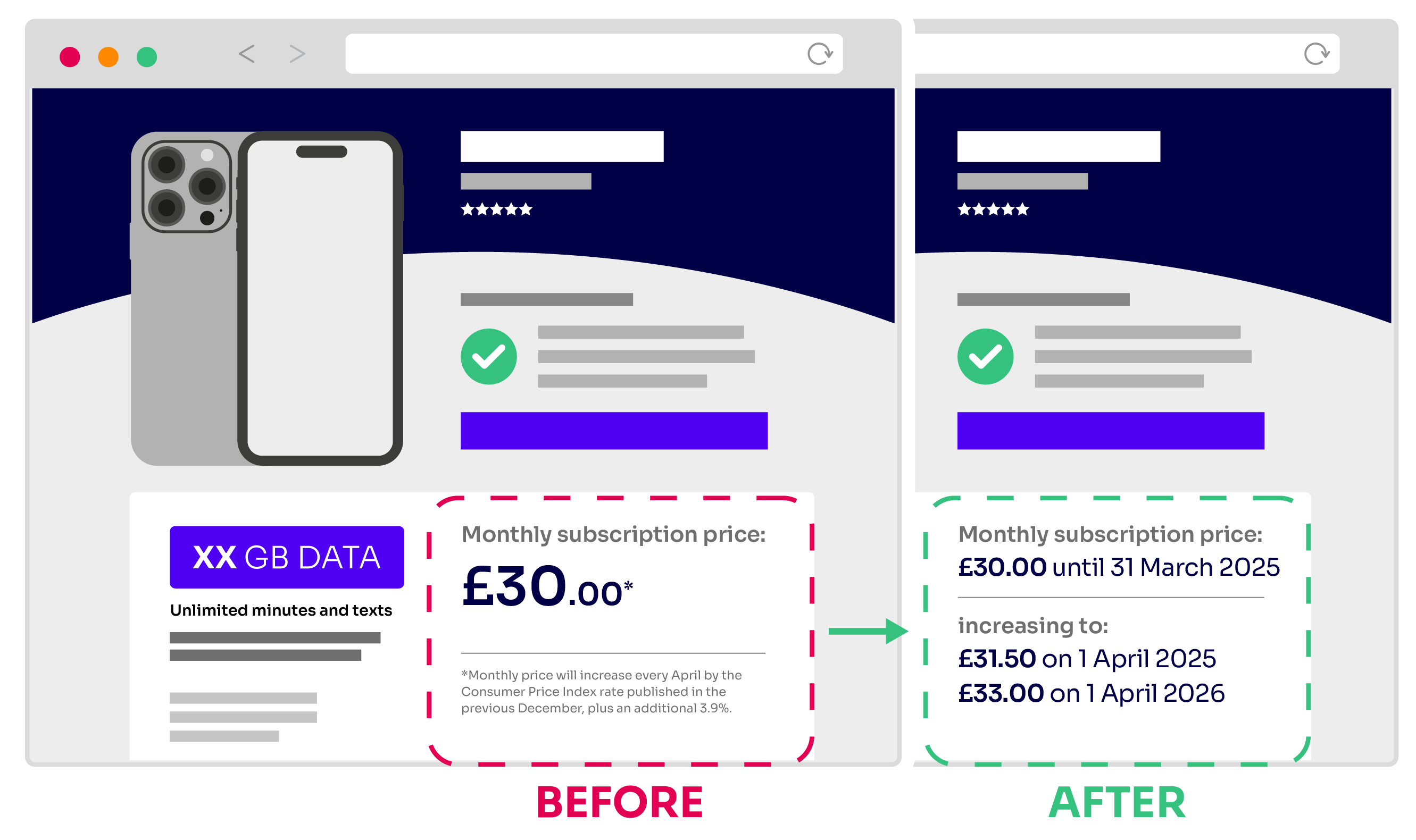
Image Source: Ofcom
A tempting monthly price on the box rarely reflects the full cost once the small print is included.
Higher Total Contract Costs Explained
Headline prices can mislead buyers looking at 2-year broadband deals. ComparedFibre’s figures show that BT Fibre 2 costs £30 a month on a 24-month contract. Its £30 setup charge and £4 April increase bring the total to £798 over two years. Cuckoo’s plan costs £27 a month, has no setup fee or price rises, and totals £648. That creates a £150 difference despite the similar starting prices.
National 150Mbps deals show the same pattern. EE’s Full Fibre 150 and TalkTalk’s Full Fibre 150 cost between £704 and £847.76 after the £30 activation charge and annual price rises. The rises alone add about £104 to a typical 24-month broadband contract.
Higher Total Contract Costs: Household Effect
This difference matters for households that budget month by month. One listed deal starts at £21.99, then rises to £25.99 and later £29.99. Its total contract cost reaches £639.76 before the £125 reward is deducted, which brings the equivalent monthly cost to £21.45.
Virgin Media’s M250 package follows a similar pattern. Its effective monthly price is about £29.66. That is around £4 more than the advertised starting price. This is after spreading both annual rises over the contract term.
Higher Total Contract Costs: Costs and Terms to Check
Ofcom has required providers to show future prices in pounds and pence before customers sign since 17 January 2025. Providers can no longer use a vague percentage increase instead.
Buyers should sort deals by total contract cost instead of monthly price. The cheapest advertised figure rarely offers the best value after setup charges and price rises are included. Broadbandfreedom.co.uk updates its listings daily for around 30 UK providers. It shows the total cost alongside the starting price for this reason.
7. Pro: No-Price-Rise Deals Offer More Predictable Bills
Image Source: Ofcom
“Our rules ensure customers clearly understand the prices they will pay throughout their contract. They avoid unpredictable and volatile inflation-linked price rises.” Banning price rises altogether risks unintended consequences, including the death of the introductory discount.” — Ofcom, Statement from an Ofcom spokesperson
Not every two-year broadband deal risks a mid-contract price increase. A small number of providers fix their prices from the day customers sign up.
No-Price-Rise Deals Explained
A fixed-price two-year broadband contract keeps the monthly amount agreed at sign-up unchanged throughout the term. BT, Virgin Media, Sky, TalkTalk, Vodafone and Plusnet do not offer this. This is because each includes some form of annual increase. Since 17 January 2025, Ofcom has required providers to show these increases in pounds and pence. They must do this before contracts are signed.
Most providers chose increases of £3.50 to £4 a month each April. Earlier increases were often linked to CPI or RPI, plus extra percentage points. BT, Plusnet, Vodafone and EE increased prices by 7.3% in 2026, based on 3.4% CPI plus an additional provider charge.
No-Price-Rise Deals: Household Impact
Smaller full-fibre altnets, including YouFibre, Trooli, Zen Internet, Fibrus and BeFibre, mostly offer fixed prices. These are on 24-month broadband contracts. Rebel Internet is available nationwide through the Openreach network. Its 115Mb package costs £34 a month, while its 1Gb package costs £48. Both run for 24 months with no mid-contract increase. Fibrus charges £17.99 a month for Full Fibre 150 and £22.99 for Full Fibre 500 on an 18-month term. Zen ended its lifetime price guarantee in May 2022. It now costs more than several rivals.
This is true even though those rivals still raise prices each year.
No-Price-Rise Deals: Costs and Terms to Check
Coverage decides if these deals are available, so checking your postcode matters more than for standard 24-month broadband contracts. Some fixed offers, including Community Fibre’s, are only promotional and end on 2 February 2026. Standard annual increases resume after that date. Out-of-contract charges can still rise after the minimum term ends. Fibrus adds £10 to £15 a month at that point. Compare broadbandfreedom.co.uk listings with the provider’s terms. This will confirm how long the fixed rate lasts.
8. Con: Pre-Agreed Price Rises Usually Do Not Allow a Penalty-Free Exit
Image Source: Ofcom
A price-rise clause accepted at sign-up changes a customer’s options once the higher charge appears on their bill.
Pre-Agreed Price Rises Explained
A provider’s future increase counts as an agreed contract term if the contract summary states it in pounds and pence. A customer on a two-year broadband deal cannot cancel without penalty once that increase takes effect. Customers can only leave without an early termination charge if the provider did not disclose the rise at sign-up. Ofcom’s rules give them 30 days after the notification letter to cancel. Sky gives customers a 30-day cancellation window for any price rise, whatever the contract says.
Pre-Agreed Price Rises: Household Effects
Customers who leave a 24-month broadband contract early may still need to pay for the remaining months and any supplied router. Which? calculated the following exit fees for a customer with 12 months left on their contract: BT £219.04, EE £150.49, Plusnet £144.75, Shell Energy £160.20, TalkTalk £122.40 and Vodafone £123.72.
Pre-Agreed Price Rises: Costs and Terms to Check
Contracts signed before 17 January 2025 may still include inflation-linked clauses that apply until the contract ends. The original contract summary confirms whether the provider clearly disclosed a future price rise. The customer can then dispute this in writing.
9. Pro: Bundled Services Can Simplify Household Bills

Image Source: Virgin Media
A household can reduce the number of monthly bills by taking broadband, TV, phone or mobile services from one provider.
Bundled Services Explained
Virgin Media’s 2-in-1 bundles combine broadband and TV for one monthly price. Entertainment packages range from £31.99 with its Entertainment bundle to £67.99 with the Max Volt bundle, and each has a 24-month term. Its Flex TV option combines a rolling 30-day TV contract with a 24-month broadband term. It costs £5 more than broadband alone and gives 10% bill credit on subscriptions such as Netflix or Sky Cinema. BT offers a Sport TV plan with Full Fibre 150 from £51.99 a month on a 24-month contract. The price rises to £63.99 by March 2028.
Bundled Services: Household Effects
One provider for broadband, TV and phone means one monthly bill instead of three separate payments. Moving all three services to a new address also avoids a fee.
Bundled Services: Costs and Terms to Check
A downgrade to any bundled service can remove the bundle discount or end free Netflix access. Any upgrade triggers standard pricing for that service. Virgin Media may withdraw or change the price after a package change.
A comparison of broadbandfreedom.co.uk and a provider’s bundle terms can help you check the cost. It can show whether a two-year broadband deal is cheaper.It can also show if it is cheaper than paying for each service separately.
10. Con: Service Problems Can Require Evidence Before You Can Leave Without Fees
Exit rights for faulty broadband exist on paper, but proving that a fault justifies a penalty-free exit can take effort.
Service Problems and Exit Rights Explained
A customer can cancel a two-year broadband deal for free.This only applies if the connection speed is below the Minimum Guaranteed Access Line Speed given at sign-up. The provider must also receive a month to fix the issue.
Ofcom’s voluntary codes, updated on 21 December 2022, give customers this right. Customers can use it when download speeds fall below the guaranteed minimum. Proving the case requires using Ofcom’s speed checker and saving the results before reporting a fault. Guidance from broadband.co.uk states that speeds must be substantially below the quoted level. A quoted speed of 65Mb that consistently delivers 5Mb would support a strong case.
Service Problems and Exit Rights: Household Impact
Saved evidence can prevent a complaint from stalling. A household that reports a lost service should record when it reported the issue and the promised activation date. It should also keep the engineer appointment window and final repair date. Persistent faults that last for weeks may justify a penalty-free exit from a 24 month broadband contract. This applies if the household can show the issue stayed unresolved for a reasonable time.
Service Problems and Exit Rights: Costs and Terms to Check
The household should ask for a deadlock letter if the provider disagrees. It can also wait eight weeks before taking the case to CISAS or the Communications Ombudsman. Both services are free, and their decisions bind the provider.
11. Pro: Less Frequent Deal-Hunting and Renewal Administration
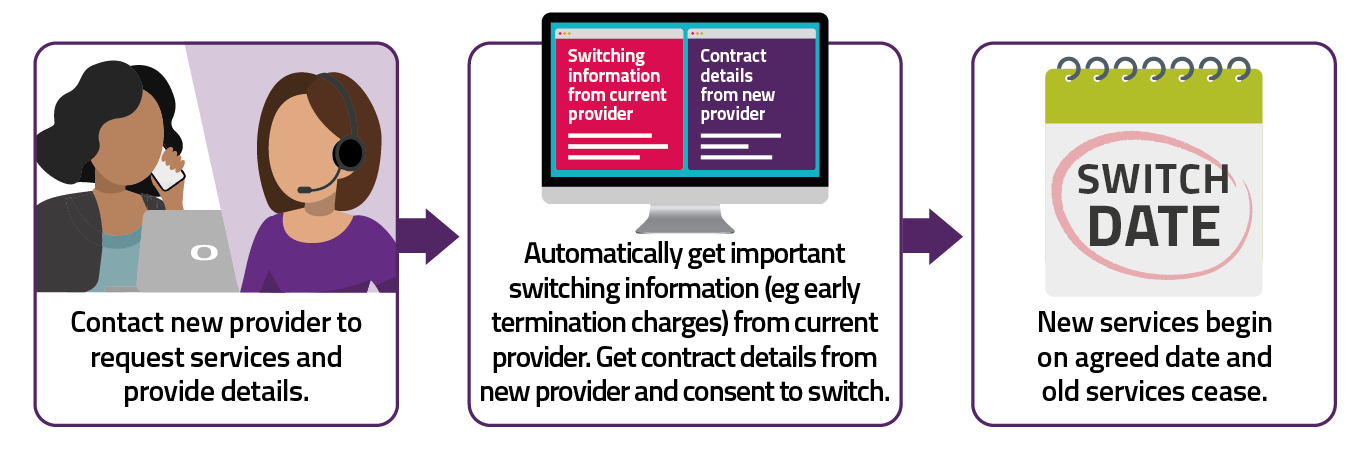
Image Source: Ofcom
A 24-month broadband contract cuts renewal paperwork in half compared with a 12-month contract.
Less Frequent Deal-Hunting Explained
A two-year term means you only need to research, compare, and switch broadband deals every 24 months. This suits households that do not want to search broadband 2 year contract comparisons every year. Providers must send a notification by email, phone, or text 10 to 40 days before the minimum term ends. It must outline the best comparable deals and any available upgrade options.
Less Frequent Deal-Hunting: Household Effects
Fewer renewal cycles do not remove the need to take action. Customers who ignore the notice and stay on the same package will usually pay more. Ofcom research shows that landline and broadband customers who stay out of contract pay 20% more on average. The figure rises to 26% for bundles that include TV. Prices can increase by 50% or more after the minimum term ends. Separate Ofcom research from February 2026 found that out-of-contract customers faced bills that were £7 to £9 higher each month.
Less Frequent Deal-Hunting: Costs and Terms to Check
You can check a contract end date through your provider’s app or website account. Customer service or your original paperwork can also confirm it. Switching is simpler under One Touch Switch. Your new provider cancels the old contract and lines up the new service’s start date automatically.
12. Con: A Long Tie-In Can Delay Access to Better Full Fibre Offers
Image Source: Ofcom
A two-year broadband contract can stop a household from switching to a better full-fibre deal during the term.
Delayed Access to Better Full Fibre Offers Explained
A household on part-fibre (FTTC) may see full fibre become available through another network before its 24-month term ends. Switching usually requires a new contract of at least 12 months, which the household must choose later rather than when it would prefer.
Delayed Access to Better Full Fibre Offers: Household Effect
Leaving early to take that better offer usually means paying an early termination fee. To cite an instance, Vodafone charges 80% of the monthly cost, minus any discount, multiplied by the remaining months. A £30 plan with a £5 discount and five months left on a two-year broadband deal would therefore cost £100.
Delayed Access to Better Full Fibre Offers: Costs and Terms to Check
Some providers offer switching credit to reduce these costs. BT, EE, Sky and Virgin Media, until 28 December 2026, offer up to £300 towards exit fees. YouFibre matches this amount on 24-month packages, while Fibrus offers up to £400. Each provider requires a final bill as evidence within a specified claim window. Checking broadbandfreedom.co.uk against these terms can show whether switching before the contract ends still makes financial sense.
Comparison Table
| # | List Item | Type | Main Benefit/Issue | Key Financial Impact | Important Terms to Check |
|---|---|---|---|---|---|
| 1 | Lower Monthly Broadband Costs for Households Staying Put | Pro | 24-month contracts often cost less each month than shorter terms | Average starting prices: £28.41 (FTTP), £29.08 (Virgin Media cable), £29.48 (FTTC), £16.15 (mobile broadband); BeFibre charges ~£4 extra per month for 12-month deals versus 24-month deals | Check if the monthly price is fixed or increases during the contract. Check for cashback or voucher rewards. Compare the equivalent monthly cost across the full term |
| 2 | A Two-Year Commitment Gives Renters Less Flexibility | Con | Tenancy lengths rarely match 24-month contracts, which can create risks for renters | Exit fees often equal the remaining contract value; Virgin Media credits fees back for moves outside its network area with proof within 30 days; Hyperoptic waives fees for moves within its network | Provider moving-home terms: notice periods from two weeks to 30 days. Transfer charges range from £0 to £60. Some providers waive fees if you show evidence |
| 3 | Included Equipment Can Cut Upfront Costs | Pro | Many deals include a router and installation at no extra cost | Virgin Media QuickStart: £0 setup (£30 if you choose an engineer when self-install is available); Airband: free WiFi 6 mesh router; Three: no setup fee with next-day delivery | Installation fees, which rarely exceed £40; delivery charges (£10-£15); equipment return requirements when the contract ends |
| 4 | Installation and Delivery Charges May Still Apply | Con | Providers can add setup fees despite claims of “free equipment” | New landline: ~£140; reactivating a line: £70; BT/EE: £30 setup fee; Plusnet: £20; Sky/NOW: £5; missed appointment: £49 (toob.co.uk) | Check if the setup fee is refundable in the 14-day cooling-off period.Check the automatic compensation rates.You may get £32.31 for a missed visit.You may get £6.46 per day for delays.Check if you need the landlord’s permission to drill |
| 5 | Promotional Rewards Can Improve Overall Value | Pro | Gift cards, vouchers, or cashback can reduce the total contract cost | Typical rewards: £120-£140; cashback sites: £50-£200; referral schemes: £40-£100, depending on the provider | Claim windows range from 30 to 120 days.Activation periods range from 3 to 12 months.Cancellation can affect rewards.For example, Community Fibre may withdraw a reward if you cancel within 30 days |
| 6 | Headline Discounts Can Hide Higher Total Contract Costs | Con | The advertised monthly price may not include setup fees or mid-contract rises | BT Fibre 2: £798 over 24 months (vs Cuckoo £648); typical rises add ~£104 to the contract; effective monthly costs can be £4+ higher than advertised | Total contract cost, not only the monthly price; setup charges; yearly price rises in pounds and pence; equivalent monthly cost after rewards |
| 7 | No-Price-Rise Deals Give You More Predictable Bills | Pro | A fixed monthly price over the full contract term avoids surprise increases | Rebel Internet: £34/month (115Mb) or £48/month (1Gb) with no rises; Fibrus: £17.99-£22.99/month fixed over 18 months | Coverage availability, mainly through smaller altnets; promotional end dates; out-of-contract charges, which can add £10-£15 per month after the minimum term |
| 8 | Pre-Agreed Price Rises Usually Do Not Give You a Penalty-Free Exit | Con | Price rises disclosed at sign-up remove your right to leave without a penalty | Exit fees with 12 months remaining: BT £219.04, EE £150.49, Plusnet £144.75, TalkTalk £122.40, Vodafone £123.72 | Check if the price rise appears in the contract summary. The 30-day exit window only applies if the rise was not pre-agreed. Sky may still offer it regardless. Check the original contract date. Contracts from before 17 January 2025 may include inflation clauses |
| 9 | Bundled Services Can Make Household Bills Easier to Manage | Pro | One bill for broadband, TV, phone, and/or mobile reduces admin | Virgin Media 2-in-1: £31.99-£67.99/month; BT Sport + Full Fibre 150: £51.99/month, rising to £63.99 by March 2028; Flex TV: +£5/month with 10% credit on subscriptions | How a downgrade affects your deal, as you may lose the bundle discount. How upgrade pricing works, which may trigger standard rates. Whether the bundle costs less than separate services |
| 10 | Service Problems May Require Evidence Before You Can Leave Without Fees | Con | A penalty-free exit requires proof that speeds fall below the Minimum Guaranteed Access Line Speed | You must give the provider 1 month to fix the issue before the exit right applies. A major speed drop is required. For example, a 65Mb service that consistently delivers 5Mb | Speed test results from the Ofcom checker. Fault logs with times, dates, and appointment details. The deadlock letter process.Escalation to CISAS or the Communications Ombudsman. This service is free |
| 11 | Less Frequent Deal Hunting and Renewal Admin | Pro | A 24-month term means you only need to manage switching every 2 years instead of each year | Out-of-contract customers pay 20% more on average. TV bundles cost 26% more on average. Bills can rise by 50% or more after the minimum term. This is £7 to £9 more per month (Ofcom, February 2026) | Contract end date through the app, website, or paperwork; end-of-contract notification 10-40 days before the term ends; the One Touch Switch process |
| 12 | A Long Tie-In Can Delay Access to Better Full Fibre Deals | Con | You cannot switch to better full fibre without exit fees if it becomes available during the contract | Vodafone exit-fee example: 80% of (£30 – £5 discount) × 5 months = £100; switching credit is available from BT/EE/Sky/Virgin Media up to £300, YouFibre £300, and Fibrus £400 | Early termination fee calculation; eligibility for switching credit; claim windows to get exit fees reimbursed; final bill requirements |
Conclusion
A review of these twelve points shows that a two-year broadband deal suits some households much better than others. Lower costs, bundled extras and fewer renewal concerns make a strong case. Exit fees, price rises, and less flexibility are real drawbacks for renters. They also affect anyone who may want a better full-fibre deal later.
The right choice usually depends on your circumstances, not a headline price. Households should consider their moving plans and budget before signing a contract. Broadbandfreedom.co.uk updates its offers each day from about 30 top UK providers. These include Sky, BT, and Virgin Media. This makes the deals easier to compare.
FAQs
Q1. Is a two-year broadband deal worth it?
A two-year deal can offer lower monthly costs, rewards and fewer renewals. It is usually best suited to households staying put, as moving or switching early may mean paying exit fees.
Q2. How can I compare the true cost of 24-month broadband deals?
Add all monthly payments, planned price rises and upfront fees, then subtract any rewards you can claim. Divide the total by 24 to find the equivalent monthly cost.
Q3. What happens if I move home during a two-year broadband contract?
You may be able to transfer your service, but charges or a new minimum term could apply. If your provider cannot serve the new address, whether it waives exit fees depends on its moving-home policy.
Q4. Can I leave my broadband contract without a penalty if prices rise?
Usually not if the increase was clearly agreed at sign-up. An undisclosed rise generally gives you 30 days from notification to leave without an early termination fee. Check your provider’s terms for exceptions.
Q5. Can I cancel a two-year broadband deal if the speed is too slow?
Under Ofcom’s voluntary broadband speed codes, you may leave without fees. This applies if speeds stay below your guaranteed minimum. It also applies if your provider cannot fix the issue within a month. Keep speed-test results and fault records to support your complaint.
Related links
See how Broadband Freedom can help you: compare broadband deals available at your postcode.