

Estimated reading time: 8 minutes
Takeaways
- Mobile broadband deals eliminate installation delays and offer portable internet solutions for homes and travelers.
- Use comparison tools to find the best mobile broadband deals in the UK by filtering price, data limits, and contract lengths.
- Choosing the right device—dongle, MiFi, or home router—depends on your internet needs and usage locations.
- Match your Mbps requirements to your household activities to prevent buffering during streaming or gaming.
- Always check local network coverage before securing a deal to ensure reliable connectivity.
Contents
- Summary
- Why Comparing Mobile Broadband Deals Saves Time and Money
- Picking Your ‘Wi‑Fi in a Box’: Dongles vs. MiFi vs. Home Routers
- Will It Buffer? Matching Your Mbps to Netflix and Gaming
- Navigating the ‘Fuel Tank’ of Data Caps and Fair Usage
- The 30-Second Signal Check to Ensure a Strong Connection
- Securing the Best Mobile Broadband Deal
- Q&A
Waiting weeks for an engineer to drill holes in your walls is deeply frustrating. According to industry data, standard fixed-line installations take up to 14 days, but mobile broadband lets you skip this queue entirely. Think of it as “Wi‑Fi in a box”—it simply uses a standard phone signal to power a home router, which instantly eliminates the cost of a traditional landline.
Your internet setup shouldn’t tie you down to a single location. Because this technology is truly portable, your connection moves exactly when you do. Pinpointing the best mobile broadband deals in the UK makes securing a flexible pay monthly broadband package completely stress-free. Comparing today’s top UK broadband deals with a quick broadband deals comparison ensures you get fast internet the minute your device arrives and helps you compare broadband prices quickly.
Summary
Mobile broadband offers a portable, plug-and-play alternative to fixed lines, avoiding installation delays and landline costs. Use a mobile broadband comparison to filter UK deals by price, data, and contract length, compare broadband prices, then choose the right device (dongle, MiFi, or 4G/5G home router) for your situation. Match your speed and latency needs to activities like streaming and gaming, pick sufficient data (or unlimited) while noting fair usage policies, and always check local coverage from EE, Three, O2, and Vodafone. For best performance, place the router near a window once it arrives.
Why Comparing Mobile Broadband Deals Saves Time and Money
Finding the perfect internet setup shouldn’t feel like a chore. Instead of checking every network’s website, you can compare mobile broadband with broadbandfreedom.co.uk to see all the top UK broadband packages in one place. Whether you want a cheaper 4G plan or faster 5G speeds, using a dedicated mobile broadband comparison —or a broader broadband deals comparison for broadband and mobile deals UK—saves hours of searching. These tools also make it simple to compare broadband prices at a glance.
The real trick to finding value is filtering for exactly what you need. Comparison tools instantly sort deals by:
- Price: Find options starting from under £20 a month.
- Data Cap: Choose a limited plan, or go completely unlimited for endless streaming.
- Contract Length: Lock in a standard 24-month deal, or gain contract flexibility with a 1-month rolling plan you can cancel anytime.
Once your terms are sorted, the next step is deciding which physical device actually brings that internet signal into your home.
Picking Your ‘Wi‑Fi in a Box’: Dongles vs. MiFi vs. Home Routers
Relying on your phone to get a laptop online might work temporarily, but it quickly drains your battery. Upgrading from phone tethering to dedicated mobile broadband devices provides a much stronger signal without overheating your handset. These standalone gadgets are built specifically to handle web traffic efficiently.
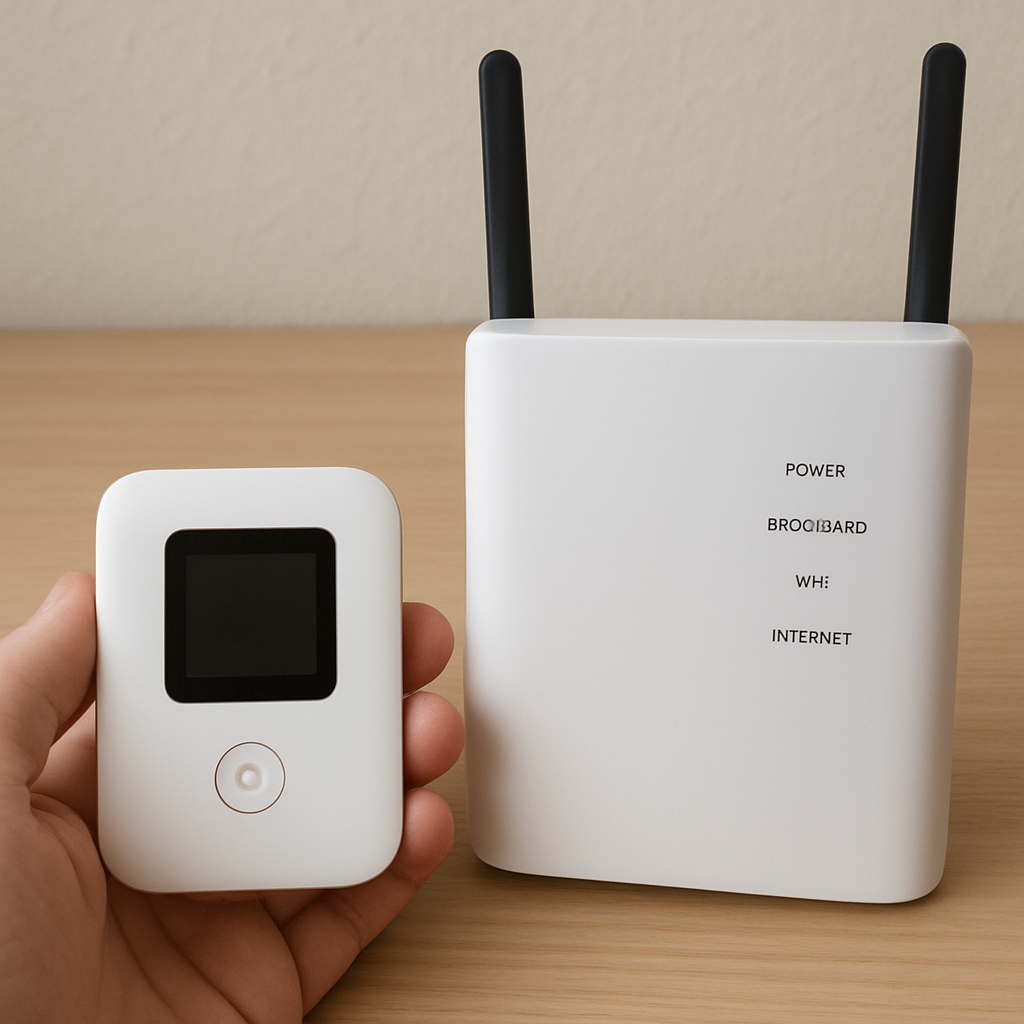
For people constantly on the move, pocket-sized hardware is best. You can keep the cost of 4G dongles for laptops low by plugging a simple USB stick directly into your computer for instant solo access. Alternatively, if you need a portable Wi‑Fi router for UK holidays or train commutes, a battery-powered “MiFi” creates a personal Wi‑Fi bubble for several gadgets at once.
When outfitting a temporary flat or rural house, you need hardware with more muscle. A plug-in 4G or 5G home router sits on your windowsill and powers the whole family, skipping the need for an engineer completely. Once you pick the perfect box, you must ensure the network signal feeding it is fast enough for your household. Matching your Mbps to Netflix and gaming is your next crucial step.
Will It Buffer? Matching Your Mbps to Netflix and Gaming
Comparing mobile internet plans often feels like a maths test, but “Mbps” is simply your connection’s speed limit. While a standard 4G signal handles basic browsing perfectly, the main differences between 4G and 5G mobile home internet involve raw speed and lower “latency.” Latency is the frustrating delay you experience as gaming lag or awkward pauses on video calls. Because 5G technology minimises this invisible delay, it actively delivers the best 5G mobile broadband for gaming and flawless Zoom meetings.
Match your household to these simple Mbps benchmarks to avoid buffering:
- Web Browsing: 10 Mbps (Great for emails and solo scrolling)
- HD Netflix: 25 Mbps (Required for each active TV)
- Multiplayer Gaming: 50+ Mbps (Essential for zero lag)
Adding these numbers together helps calculate your exact household requirements without overpaying for unnecessary speed. Once you secure the right performance level for your family’s favourite devices, you must ensure you have enough monthly data to keep everything running.
Navigating the ‘Fuel Tank’ of Data Caps and Fair Usage
Think of your monthly allowance like a fuel tank. While speed dictates how fast you drive, your data limit determines how far you travel. Managing data limits on mobile internet plans is vital if you stream video, as just one hour of HD Netflix burns through 3GB. A smaller 50GB allowance easily covers daily browsing and emails, but if your family constantly watches movies or downloads games, upgrading to unlimited data mobile hotspot plans is absolutely worth the extra £5.
Even with “unlimited” packages, networks often include a hidden “Fair Usage Policy” inside their pay monthly broadband terms. This rule simply means that while your tank never technically empties, providers might temporarily slow your connection if you download an extreme amount—usually over 600GB—to keep the network stable for everyone else. With speed and data matched to your needs, establishing a strong physical connection is essential.
The 30-Second Signal Check to Ensure a Strong Connection
Before comparing the best broadband and mobile deals UK providers offer, you must confirm local signal strength. Unlike fixed cables, wireless internet relies entirely on invisible signals reaching your router, explaining why a network might work perfectly in the garden but struggle in the kitchen.
Always use a UK network coverage checker for mobile data to shortlist mobile broadband deals. Simply enter your postcode to check these four primary networks before securing a deal:
- EE: Highly reliable for rural 4G.
- Three: Frequently offers the fastest local 5G.
- O2: Excellent at penetrating indoor walls.
- Vodafone: Delivers consistent overall urban coverage.
Securing the Best Mobile Broadband Deal
Checking your local network coverage and using a tool to compare broadband prices directly addresses your daily connectivity needs. Before you buy, a quick broadband deals comparison can highlight the best broadband and mobile phone deals UK and the most suitable broadband packages UK. When your box arrives, place the router near a window for the strongest signal. With today’s top mobile broadband deals delivering instant plug-and-play freedom, you are just days away from fast, reliable internet without the installation wait.
Q&A
Question: What is mobile broadband, and why pick it over a fixed-line connection?
Mobile broadband is “Wi‑Fi in a box” that uses a standard mobile signal to power a home router, so you can skip installation delays and landline costs. Unlike fixed lines that can take up to 14 days and may require engineers drilling into your walls, mobile broadband is plug‑and‑play and portable—your connection moves with you, making it ideal for renters, temporary setups, or anyone who wants quick, flexible internet.
Question: How do I choose between a dongle, a MiFi device, and a 4G/5G home router?
Match the device to how and where you’ll use it. A USB dongle is the cheapest, simplest option for solo laptop use on the go. A battery-powered MiFi creates a personal Wi‑Fi hotspot for multiple devices—great for commutes or holidays. A plug‑in 4G/5G home router suits households or temporary flats, delivering stronger whole‑home Wi‑Fi without an engineer; place it on a windowsill for best signal. All three beat phone tethering by preserving your phone’s battery and providing a stronger, more stable connection.
Question: How much speed (Mbps) do I actually need for streaming and gaming?
Use these benchmarks and add them up for simultaneous use: 10 Mbps for web browsing, 25 Mbps per HD Netflix stream, and 50+ Mbps for smooth multiplayer gaming. 5G doesn’t just boost speed—it also lowers latency, which reduces gaming lag and makes video calls feel more natural. If multiple people stream or game at once, choose a plan that comfortably covers the combined Mbps.
Question: How should I pick my data allowance, and what does “Fair Usage” mean on unlimited plans?
Think of data like a fuel tank: 50GB is typically enough for browsing and emails, but HD video can burn ~3GB per hour, so frequent streaming or game downloads make unlimited data worth the small premium (around £5 more). Even “unlimited” plans may include a Fair Usage Policy—if you use an extreme amount (often around 600GB+), your provider might temporarily slow speeds to keep the network stable for everyone.
Question: What’s the quickest way to find the best UK mobile broadband deal for my area?
Use a comparison tool (e.g., BroadbandFreedom.co.uk) to filter by price (deals from under £20/month), data cap (limited vs. unlimited), and contract length (flexible 1‑month rolling vs. 24‑month). Before choosing, run a postcode coverage check across the four main networks: EE (strong rural 4G), Three (often fastest local 5G), O2 (better indoor penetration), and Vodafone (reliable urban coverage). When your kit arrives, position the router near a window for the strongest signal. Searching for terms like “broadband UK mobile” can also help refine results.
Related links
See how Broadband Freedom can help you, click here to check your postcode