
Estimated reading time: 9 minutes
Takeaways
- Alternative internet options are available for those without fiber, such as cable, DSL, 5G, and satellite.
- Cable offers high download speeds and is ideal for content consumption but has slower upload speeds.
- DSL is widely available and cost-effective, but its speed decreases with distance from the telephone exchange.
- 5G home broadband provides fast internet without wires, but performance depends on signal strength in your area.
- Satellite internet is a viable solution for remote locations, utilizing Low Earth Orbit technology for lower latency than traditional options.
Contents
- The TV Cable Option: Is Cable Broadband a Strong Fibre Alternative Internet?
- The Phone Line Workhorse: When is DSL the Right Choice as Alternative Internet?
- Cutting the Cord: Can 5G Home Broadband Replace Your Wires?
- Internet from the Sky: Your Best Hope for Rural Broadband?
- How to Choose Your Best Fibre Alternative Internet: A 3-Step Action Plan
- Frequently Asked Questions
Tired of seeing ads for lightning-fast fibre internet, only to discover it’s not available on your street? You’re not alone. The good news is, powerful broadband alternatives and alternative internet options exist, including non fibre broadband. Before comparing broadband providers in the UK, it’s important to know what you are paying for: speed and reliability.
First is speed, measured in Mbps (Megabits per second). Think of it like a motorway with lanes. More lanes allow more data to travel at the same time. This helps prevent slowdowns when many people are online.
A family of four streaming Netflix might need 50 Mbps. A single person just browsing the web may be fine with 15 Mbps.
But speed isn’t the whole story. Have you ever experienced that awkward delay on a video call? That’s latency, your connection’s reaction time. For watching movies, a little delay doesn’t matter much. But for online gaming or clear video calls, a low latency connection is critical to avoid frustrating ‘lag’.
A responsive connection is often more important than raw speed.
To find your fit, identify your household’s needs. Most users fall into one of these categories:
- Light Use (Email, Browsing): 5-10 Mbps
- Medium Use (HD Streaming, Video Calls): 25-50 Mbps
- Heavy Use (4K Streaming, Gaming, Multiple Users): 50+ Mbps
The TV Cable Option: Is Cable Broadband a Strong Fibre Alternative Internet?
If fibre isn’t available on your street, the next best thing might already be wired into your home. Cable broadband delivers high-speed internet through the same coaxial cable network used for cable TV services. This infrastructure is already set up in many cities and towns. It is one of the most available and trustworthy high-speed internet options.
This option uses a different technology than fibre broadband. For many online tasks, you may not see much difference.
For sheer download performance, cable internet is a powerhouse. Speeds can be hundreds of Megabits per second (Mbps). This means your family can stream several 4K films and browse websites smoothly.
However, cable typically has a crucial trade-off: its upload speed is significantly slower than its download speed. Getting information from the internet is quick, but sending information out can be slow. For example, uploading a large video for work or backing up photos often takes time.
So, who is cable as an alternative internet best for? It’s a fantastic choice for households that mostly consume content. If your family uses the internet for streaming, gaming, and browsing, cable provides a fast experience for these activities.
If you work from home and upload large files or create content, you might experience slower upload speeds.
The Phone Line Workhorse: When is DSL the Right Choice as Alternative Internet?
Cable uses the TV network. Another option uses the telephone line that most homes have had for many years. DSL, or Digital Subscriber Line, is a common type of broadband. It is available in many places around the country, even in areas without fibre and cable internet.
If you’re trying to figure out what to do if you can’t get fibre broadband, checking for DSL is a logical next step as alternative internet.
DSL’s performance depends heavily on one factor: distance. Your internet signal travels from a local telephone exchange to your home. The closer you are to that exchange, the stronger and faster your connection will be.
As the distance gets longer, the signal becomes weaker. This means you can’t go as fast. This idea is called distance degradation.
So, what does this mean for your movie night? If you live near the local exchange, DSL is a good and cheap internet option. It works well for web browsing, video calls, and streaming for one or two people.
For homes that are located further away, this alternative internet service might struggle to fulfil the requirements of a modern household with numerous devices.
Ultimately, DSL remains a reliable choice for lighter internet users or those in areas with fewer options. But what if you’re looking for a solution that doesn’t rely on any existing wires at all? New mobile technology provides an excellent way to access the internet without requiring a phone line or cable. This is where 5G home broadband comes in.
Cutting the Cord: Can 5G Home Broadband Replace Your Wires?
Imagine getting super-fast internet without needing any cables run into your house. 5G home broadband is a new technology for alternative internet. It uses the same strong mobile network and mobile data that smartphones use. This service is often called 5G internet or 5G home broadband.
It is a type of Fixed Wireless Access (FWA). This means the connection is sent wirelessly to a special hub that remains at your home. Think of it as a permanent, super-powered hotspot for all your devices, from laptops to smart TVs.
The primary appeal lies in its incredible convenience and potential speed. In places with good 5G coverage, the internet speed can be as good as wired connections. It can easily handle a family’s streaming, gaming, and video calls.
Setting it up is easy. Just plug the hub into a power socket. This is a great choice for tenants or people who move a lot. They can skip the trouble of scheduling installations and drilling holes in walls.
However, the performance of 5G home broadband depends entirely on the signal strength at your specific address. Walls, nearby buildings, and your distance from the nearest cell tower can all affect your speed and reliability. This variability is the key question when considering is 5G good for working from home —a strong, stable signal is essential. While most providers offer unlimited wireless internet plans for home, the speed you actually get isn’t guaranteed.
For many, 5G is a game-changing alternative, offering high speeds with unmatched flexibility. But what about those who live beyond the reach of both wires and strong mobile signals? When comparing 5G home broadband vs satellite internet, the main difference is reach. For a connection in the most remote locations, we often have to look to the sky.
Internet from the Sky: Your Best Hope for Rural Broadband?
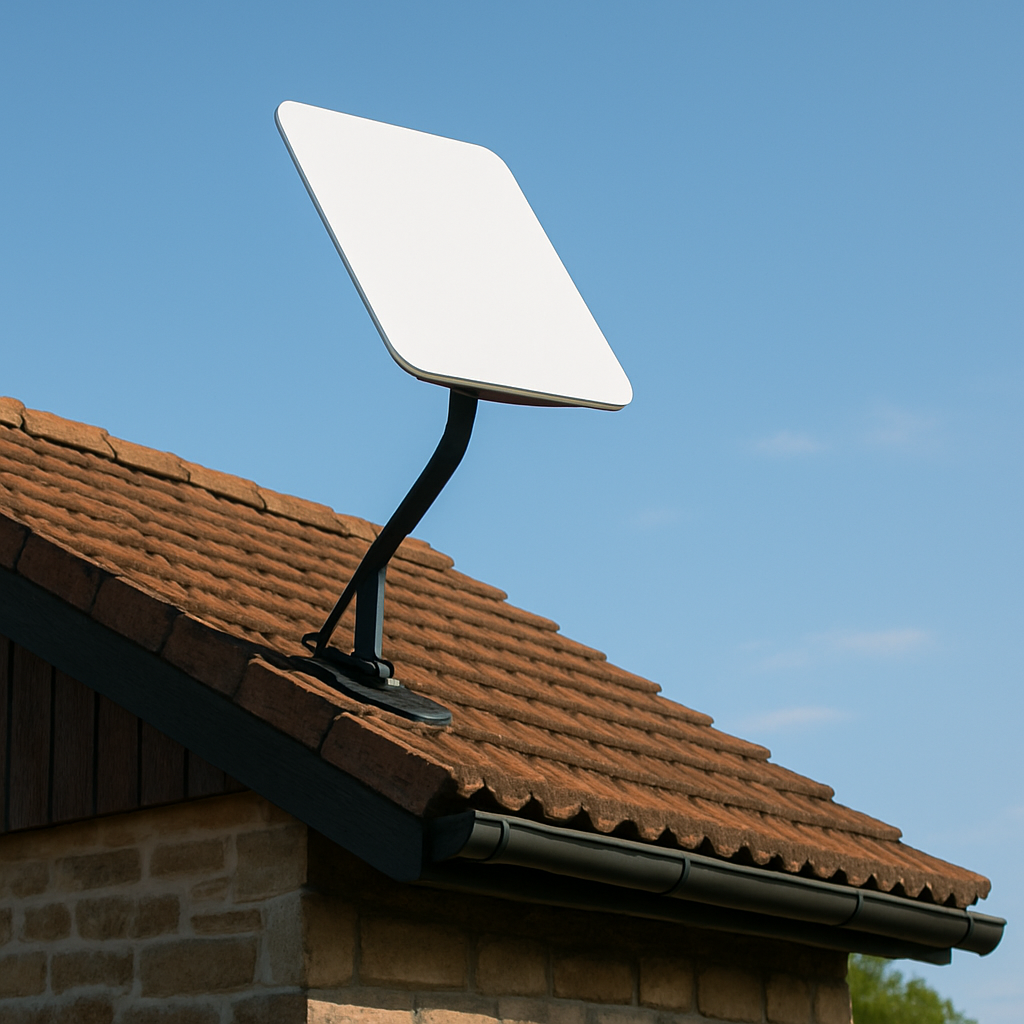
When even the best mobile signal can’t reach your home, you might need to look up for a solution. Satellite internet sends a signal from a ground hub to a satellite in space. The satellite then sends the signal back down to a small dish at your home.
Its biggest advantage is availability; if you have a clear view of the sky, you can likely get a connection, making it one of the most vital internet options for rural areas.
For years, satellite internet had a reputation for being slow and laggy. This was because the satellites were positioned very far from Earth. However, a new generation of services, like Starlink, has changed the game by using thousands of ‘Low Earth Orbit’ (LEO) satellites.
Think of it as talking to someone in a room instead of shouting from far away. It’s easier and quicker to communicate when you are closer.
This ‘closer to Earth’ approach drastically improves your connection’s reaction time, also known as latency. Low latency for satellite connections is key: high latency creates that awkward delay on video calls or frustrating lag in online games. While older satellite was unusable for these activities, modern LEO services make them perfectly possible.
It might not be the best satellite internet for gaming if you’re very competitive. However, for many people, it makes a big difference.
Even with these breakthroughs, satellite internet isn’t without trade-offs. It requires a completely unobstructed view of the sky, and very heavy rain or snow can sometimes interfere with your signal. For people without a good internet connection, new satellite services are a significant change. They now offer fast and reliable internet to even the most remote areas of the country.
How to Choose Your Best Fibre Alternative Internet: A 3-Step Action Plan
Feeling stuck without fibre is now a thing of the past. You’re no longer waiting for a new cable to reach your street; you have the knowledge to actively choose a great connection from the powerful alternatives available today. You understand the real-world differences between options like Cable, 5G, and Satellite.
So, how to choose the right broadband? Follow this simple three-step plan to guide your broadband providers comparison UK.
- Assess Your Needs: Count your devices and identify your primary use—be it streaming, gaming, or working from home.
- Check Your Postcode: This is the most critical step. Use the online availability checkers for major providers to see what non fibre broadband you can actually get.
- Compare the Details: Look beyond just the price. Check the contract length, upload speed, and any data limits to avoid surprises down the line.
The ‘best’ internet isn’t always the one with the highest speed. It’s the one that reliably fits your life. You now have the roadmap to find your perfect connection and take control, without waiting for fibre.
Frequently Asked Questions
Question: How much speed do I need, and when does latency matter? Short answer: Match speed (Mbps) to your household: 5–10 Mbps for light use, 25–50 Mbps for HD streaming and video calls, and 50+ Mbps for 4K, gaming, or multiple users. Latency is your connection’s reaction time—less critical for streaming but crucial for gaming and smooth video calls. In many cases, a responsive, low-latency connection matters more than chasing the highest headline speed.
Question: Between cable and DSL, which wired non‑fibre option is likely to fit my home? Short answer: Cable broadband is a great fibre alternative for content consumption: it delivers very fast downloads for streaming and browsing, but uploads are typically much slower—so frequent file uploaders and creators may feel the pinch. DSL rides your phone line and is widely available, but speed depends on distance to the local exchange; close by, it can handle browsing, streaming, and calls for one or two users, while farther away it may struggle with multi‑device homes.
Question: Can 5G home broadband replace wired internet, and who is it ideal for? Short answer: In areas with strong 5G coverage, performance can rival wired connections, and setup is as simple as plugging in a hub—great for renters or frequent movers. However, speeds and reliability depend entirely on your signal and location, so while many plans are “unlimited,” performance isn’t guaranteed. For working from home, prioritize a strong, stable signal.
Question: Is modern satellite internet viable for rural areas and can it handle gaming and video calls? Short answer: Yes—satellite can reach places that wires and mobile signals can’t, and new Low Earth Orbit (LEO) services (e.g., Starlink) dramatically reduce latency. That makes video calls and casual gaming feasible, though it may not be ideal for competitive play. You’ll need a clear view of the sky, and very heavy rain or snow can still affect performance.
Question: What’s the quick 3‑step plan to choose the best non‑fibre broadband? Short answer: 1) Assess your needs (devices and primary activities). 2) Check your postcode with major providers to see what’s actually available. 3) Compare more than price: look at contract length, upload speeds, and any data limits so there are no surprises.
Related links
See how Broadband Freedom can help you, click here to check your postcode