
Villagers Without TV and Internet for Six Weeks

Estimated reading time: 7 minutes
Summary
Nearly three billion people live without TV, internet, or phones, shaping daily life and village life around face-to-face storytelling, shared music, and community networks. This brings strong local bonds. It also severe information lags that widen the digital divide, undermining education, health, safety, and livelihoods. The article contrasts involuntary disconnection with chosen low-tech simple living and argues that bridging the gap requires more than cables. It needs affordability, community hubs, and digital literacy—while honouring local culture. It asks you to recognize the profound privilege and possibility of instant connectivity in a world where many still have no internet.
Table of contents
- Summary
- Suddenly cut off
- How Is Life Entertaining Without Netflix or YouTube?
- What Happens When the News Can’t ‘Break’ in Seconds?
- The Real Meaning of the “Digital Divide”: A Child’s Education and a Family’s Health
- Stronger Bonds Without Social Media? The Surprising Truth
- More Than Just Wires: What It Takes to Bridge the Chasm
Suddenly cut off
Imagine your town was cut off for six weeks—no TV, no internet, no phone service. The feeling of sudden isolation, the inability to get news or contact family, would be overwhelming. For many of us, it’s a disaster scenario.
Yet for nearly a third of the world’s population, this isn’t a temporary crisis. According to UN estimates, almost three billion people live this way every day. For these villagers without TV and internet, being disconnected is not an emergency; it is the normal state of being in everyday village life.
So, how do people live without the internet in an increasingly connected world—what does simple living look like when it’s not a choice? What does village life in these unconnected communities actually look like, from finding entertainment and getting news to handling a life-or-death emergency?
How Is Life Entertaining Without Netflix or YouTube?
Instead of families gathering around a TV, picture them gathering around a fire. In many remote communities, entertainment isn’t about passively watching a screen; it’s an active, participatory event. People don’t just consume stories—they are the ones telling them. This shifts entertainment from a solitary experience into a shared one, built on music, dance, and conversation that everyone can join, especially in village life shaped by simple living.
The most popular “shows” are often the oldest: storytelling and song. A village elder recounting a local legend or a group singing together serves the same purpose as a hit TV series. These traditional forms of communication are the original on-demand content, preserving history and providing a unique performance every time. It’s a living library of culture passed down from one generation to the next.
More than just a way to pass the time, this communal entertainment strengthens social bonds. Sharing laughter, suspense, and music face-to-face weaves a tighter community fabric in a way that staring at separate screens often can’t. But while these traditions are vital for culture, they can’t deliver an urgent weather warning or breaking news from the capital.

What Happens When the News Can’t ‘Break’ in Seconds?
For us, news ‘breaks’ in an instant. But in a village without an internet connection, or in places with no internet at all, information travels at the speed of a person on a bus or the reach of a radio signal. This gap between an event happening and people learning about it is a constant reality, creating what’s known as an “information lag.” News isn’t a stream; it’s a delivery that might be days or even weeks late.
The primary sources of information are often a shared, battery-powered radio, updates from a community leader, or news carried by travelers arriving from a distant town. An important government announcement or a new farming technique might take days to arrive, passed from one person to the next like a fragile package that could get distorted along the way.
This delay isn’t just an inconvenience; it has real costs. A farmer might sell his harvest for a low price, unaware that market prices in the city doubled yesterday. A dangerous storm warning might arrive after the storm has already passed. This information gap doesn’t just affect finances or safety—it creates profound challenges for a child’s education and a family’s health.
The Real Meaning of the “Digital Divide”: A Child’s Education and a Family’s Health
Nowhere is this information gap more critical than in a child’s education or a family’s health. While we see the internet as a source for entertainment and news, it has become a fundamental tool for opportunity and well-being. For those on the other side of this gap, the challenges of living off-grid are not about inconvenience—they are about access to basic human necessities.
This stark difference in access is what is known as the “digital divide.” It’s less a gap and more a chasm. On one side, people have the world’s knowledge, medical advice, and economic opportunities at their fingertips. On the other, people are limited to the knowledge and resources that exist in their immediate physical surroundings.
Consider the practical impact of the digital divide on education and health:
- A Medical Question: A worried parent can instantly look up symptoms or find the nearest open clinic. Without access, their only option may be to wait for a traveling doctor or walk for hours—or even days—to get help.
- A School Project: A student can research a topic using countless articles, videos, and online encyclopedias. Without access, that same student might be limited to a single, outdated textbook shared by the entire class.
For these communities, bridging the rural digital divide isn’t about streaming movies; it’s about having a fair chance. It’s about a student’s ability to learn about the world beyond their village and a family’s ability to get the care they need, when they need it, even when there is no internet.
Stronger Bonds Without Social Media? The Surprising Truth
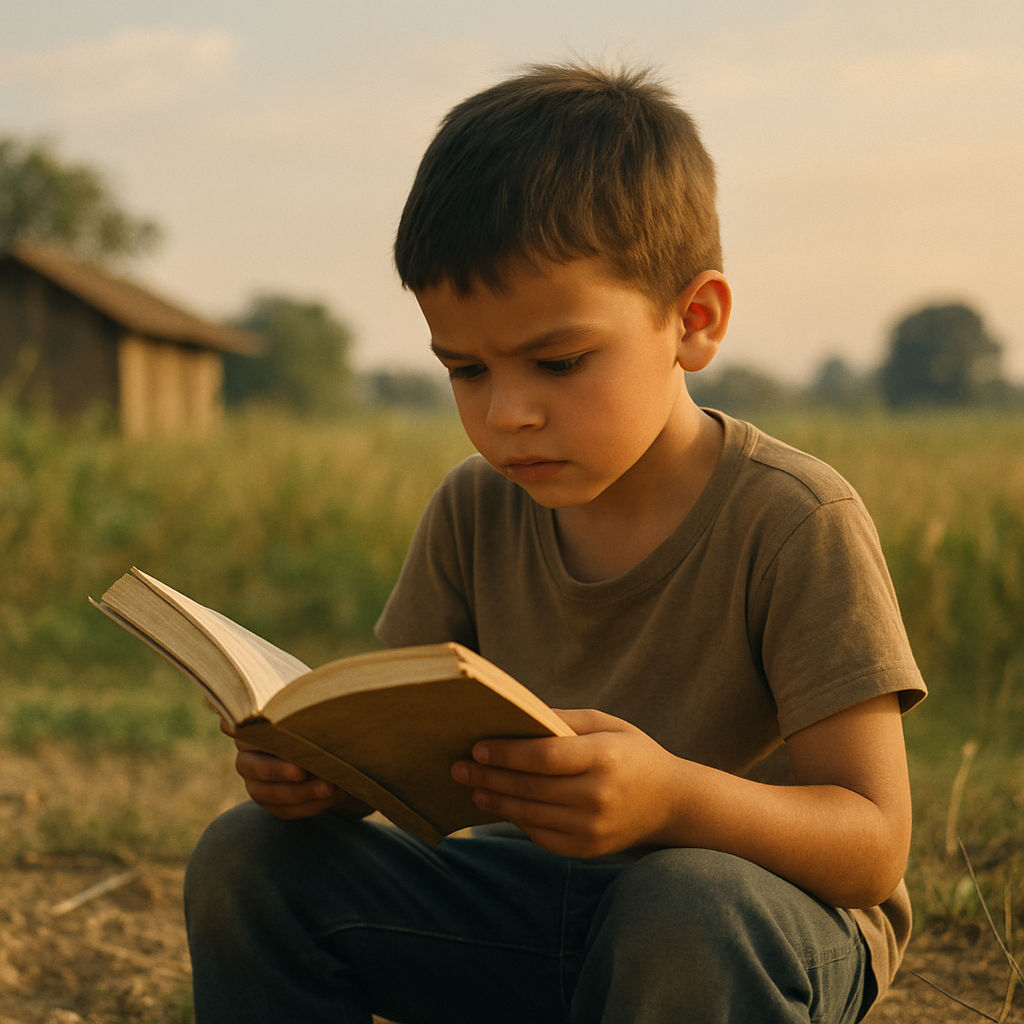
It’s easy to imagine that a life without social media fosters stronger community bonds. And in many ways, it does. When you can’t text a neighbor for help or check a news app, you rely on the people around you for everything—from borrowing tools to sharing urgent information. This interdependence creates a powerful, face-to-face social network born from sheer necessity, not just preference.
This reality, however, is fundamentally different from a chosen ‘off-grid’ lifestyle. Some groups, like certain Amish communities, deliberately limit technology to preserve their culture. For unconnected villagers, the lack of access isn’t an ideological statement; it’s a circumstance imposed by a lack of infrastructure or affordability. The choice to opt-in or out simply isn’t there, and what might be called simple living from afar is, locally, a constraint rather than a preference.
Ultimately, these strong local ties are a consequence of isolation, not a simple substitute for connection to the wider world. The same environment that nurtures close-knit support systems also creates the barriers to education, healthcare, and economic opportunity we’ve seen. It’s a complex truth that defies any romantic ideal of a ‘simpler life.’
More Than Just Wires: What It Takes to Bridge the Chasm
The gap between connected vs unconnected communities is no longer an abstract concept. Where you once might have imagined a “simpler life,” you can now see the complex reality. A world of deep community bonds, but also one with real barriers to education, safety, and economic opportunity.
Bridging the rural digital divide, therefore, is about more than just technology. For many villagers without tv and internet, solutions like community hubs and digital literacy training aim to provide opportunity. It is not just about connectivity. They empower people to access essential services while preserving the unique strengths of their local culture. Supporting resilient village life.
This new perspective changes how you see your own screen. The next time you instantly look something up or video call a loved one, pause. That effortless connection isn’t just convenience—it’s a world of possibility at your fingertips. Appreciate what that access truly means.
Check your area for the best Broadband offers available today
Related contents