


Updated: November 2026
Estimated reading time: 9 minutes
Key Takeaways
Flexible broadband can save money when you choose the right connection, calculate every charge and manage cancellation carefully.
- Choose a 30-day rolling plan for short stays or uncertainty; it removes long commitments but still requires a monthly agreement and notice.
- Check your exact address before comparing deals: full fibre, cable and 4G/5G availability, speeds and indoor mobile signal vary by property.
- Compare total costs for your actual stay, including monthly fees, setup, router charges, price changes and fixed-term exit fees.
- Match speeds to simultaneous household use, and scrutinise data caps, fair-use policies and traffic management before ordering.
- Read notice, cooling-off and equipment-return terms; give notice on time and keep proof to avoid unnecessary final charges.
- Do you need no contract broadband without being tied down for up to 24 months? We get it. A long deal can feel like the wrong fit if you’re moving, renting or watching every pound. A rolling plan keeps you connected and lets you decide when to leave [−4].
We compare broadband internet no contract options and rolling contract broadband. You’ll also find no contract wifi and broadband deals no contract. Check the best broadband deals without landline and no contract broadband UK choices. Options include no contract fibre broadband and broadband no monthly contract offers. You can also explore no contract broadband without landline.
This piece shows you how to check availability, compare real costs and sign up with confidence. Ready for freedom? Let’s begin.
What Is No Contract Broadband?
No-contract broadband describes a service without a long minimum term, rather than a product with no paperwork. We use the term for monthly arrangements that continue until we or the provider end them. These plans are often described as 30-day rolling contracts. Each month renews automatically, and we give 30 days’ notice if we want the service to end.
How rolling contract broadband works
At the time we order rolling contract broadband, we accept the provider’s terms and pay a monthly bill. The main difference is the level of commitment. Fixed plans usually have a 12-, 18- or 24-month minimum term, and leaving during that period can trigger an early disconnection charge. A rolling deal leaves no future minimum months to pay after the notice period ends.
This is different from pay-as-you-go home internet. New customers cannot get PAYG home broadband. Broadband internet with no contract still includes a monthly bill and an agreement. No-contract broadband without a landline can be an option, although the technology and availability depend on the provider and address.
Who benefits from short-term broadband
Short-term broadband suits a temporary need more than it suits someone seeking the lowest price. We may rent for a short time, wait between moves or study away from home. It can also help if we use a holiday home or plan to leave the UK. A rolling plan lets us try a provider before we choose a longer deal.
The trade-off is cost. No contract wifi costs more each month than a longer deal, and connection, installation or router charges may apply. We may also miss vouchers or gifts available with fixed terms. A higher monthly price can still cost less than paying to leave a long contract early. Broadband Freedom updates UK offers from about 30 providers, including Sky, BT and Virgin Media. These offers cover rolling plans and terms of up to 24 months.
Why no contract does not mean no agreement
The label can mislead us. We still enter an agreement that sets the monthly price, notice process, equipment rules and service conditions. “No contract” means no long fixed commitment, not no obligations.
We should check whether advertised no-contract broadband deals are genuinely rolling, whether a setup fee applies and how we must submit notice. Providers can change a rolling price with sufficient notice instead of applying the mid-contract rises linked to one- or two-year fixed terms. No-contract fibre broadband works on the same principle. Fibre describes the connection, while the rolling agreement determines how long we keep the service.
Check Which No Contract Broadband Options You Can Get
“Switching is one of the most effective ways to save money on your broadband. Most providers offer their deals at cheaper rates for new customers, and many will add high-value gift vouchers to these offers, too.” — Ernest Doku, Broadband and mobiles expert
Availability determines which no-contract broadband products we can order, so we check the exact address before we compare prices.
Use your postcode to check fixed broadband availability
Enter our postcode into Ofcom’s broadband checker, then choose the property when prompted. It shows predicted standard, superfast and ultrafast services, their top download and upload speeds, and whether packages are generally available or available in part. We can also use Openreach to check full-fibre build status. A neighbour may have service while our flat is still waiting for permission or engineering work.
England and Wales have a government address checker that shows whether gigabit service is available or planned.
Compare no-contract fibre broadband with cable
Choose FTTP if it is available. Fibre runs directly to our home, while cable normally uses coaxial cable for the final section. Cable can still deliver high speeds and does not need a phone line. We compare the technology, advertised upload speed and installation route instead of treating every package labelled fibre as similar.
Check indoor coverage for 4G and 5G home broadband
Mobile hubs can provide no-contract broadband internet, and we use Ofcom’s mobile checker and each network’s map to check coverage. Check the indoor result instead of outdoor coverage alone. Wall materials, trees and local terrain can affect performance, as can mast capacity and peak-time congestion.
Test the router near a window after delivery. No-contract 4G or 5G Wi-Fi uses the mobile network, so reception at our address determines the result.
Find no-contract broadband without a landline
No-contract broadband without a landline is available through full fibre, cable and mobile home broadband. We enter our address into provider checkers, then philtre Broadband Freedom’s daily comparison results to find rolling-contract broadband. Full fibre does not use a traditional phone line, and cable avoids one too.
If a copper-based service appears, we ask whether the line supports broadband only. We also confirm that it meets our calling needs.
Compare Broadband Deals by Total Cost
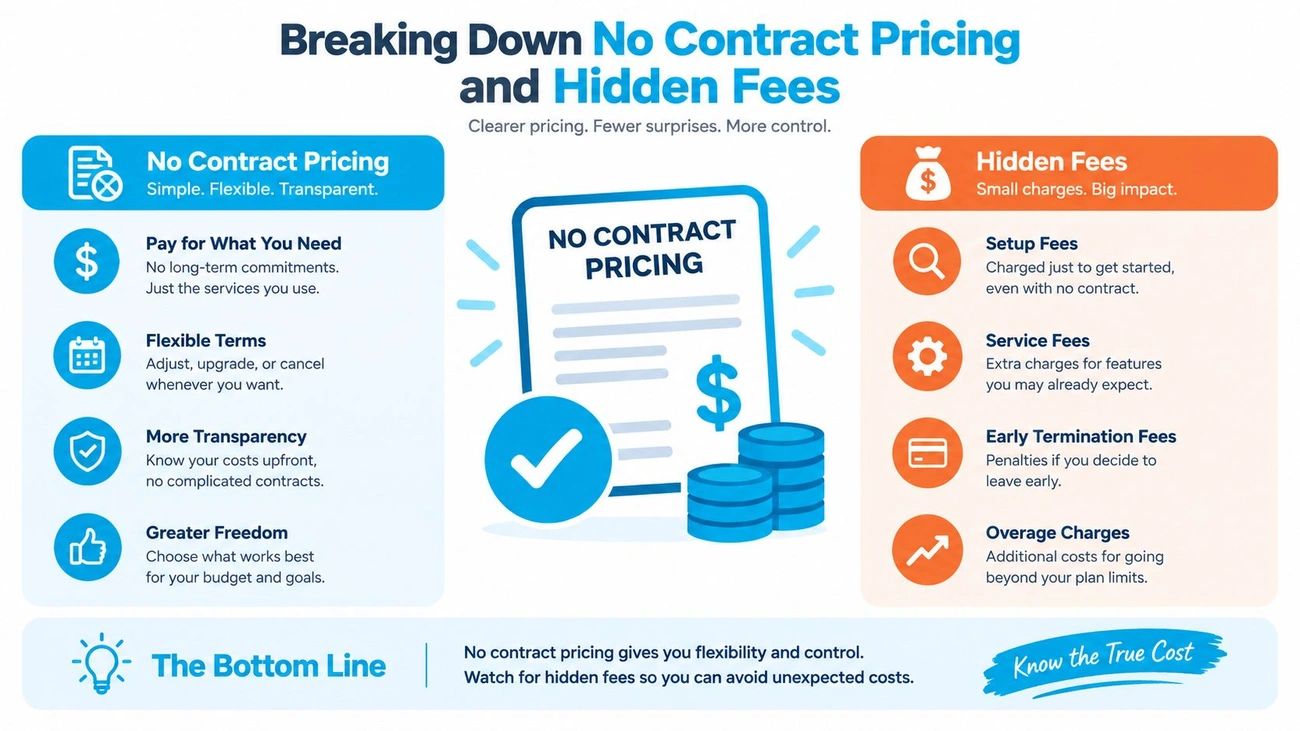
Image Source: SwiftNet Wifi
Now calculate the full cost for the period you need broadband, not just the advertised starting rate.
Match download and upload speeds to your household
Match download and upload capacity to how many people will use the connection at once. Light use in a one- or two-person home may suit 0–50Mbps. Homes with four or more people who stream or game may need 500Mbps+.
Add up monthly charges, setup fees and router costs
Broadband Freedom compares daily updated offers from around 30 UK providers, including Sky, BT and Virgin Media. Multiply the monthly price by the number of months, then add setup and router costs. Setup fees can reach £60.
Check data limits, fair use rules and price rises
Check whether “unlimited” includes a data cap, fair-use policy or traffic management. We review heavy-use restrictions and stated price rises before choosing no contract broadband.
Compare rolling deals with fixed-term plans over your stay
Calculate the cost of each option for your full stay. Compare rolling contract broadband with 12- or 24-month tariffs and account for exit charges. A fixed plan can cost less over 10 or 11 months, even after an exit fee.
Check social tariffs and student offers before paying more
Check social tariffs and student offers before paying more. Social tariffs often cost £12–£20 monthly, yet 70% of eligible households do not know about them.
How to Sign Up, Get Connected and Avoid Extra Charges
The comparison is complete. We can now turn the selected deal into a connection.
Read the minimum term and notice period before ordering
Read the terms before ordering. Confirm that rolling-contract broadband has no fixed minimum term, then note the notice period. Many providers require 30 days’ notice.
Check your current contract and arrange the switch
Check exit charges and bundled services. Under One Touch Switch, your new provider manages the move and ends your broadband after activation.
Confirm delivery dates and any installation needs
Confirm delivery or engineer appointment dates, along with any cabling or access requirements, including drilling. Full-fibre installation requires an adult aged 18 or over to be present, and you need the landlord’s permission.
Set up your router and test your connection
Connect the supplied cables and use the router’s network name and password. Test one device, then reconnect your devices to the new no-contract Wi-Fi.
Check cooling-off terms if the service falls short
Online orders include a 14-day cancellation period. Check when the period begins, since activation may mean you must pay for the service provided.
Give notice on time and return any loaned equipment
If the speed falls below its promised minimum and repairs fail, seek penalty-free cancellation. Give notice on time and return any loaned equipment by the deadline. Keep proof of return.
Conclusion
No-contract broadband gives us the freedom to stay connected without paying for months we do not need. We should check availability and compare total costs, then confirm notice periods and choose a speed that suits our household. Most importantly, Broadband Freedom lets us compare daily-updated offers from leading UK providers, including rolling plans and 24-month deals. Compare carefully, stay flexible and keep more control of our broadband budget.
FAQs
Q1. Can I get broadband without a long-term contract? Yes. A 30-day rolling plan renews monthly rather than tying you in for 12–24 months. You still accept an agreement and usually need to give 30 days’ notice to cancel.
Q2. What broadband should I choose if I might leave the UK soon? A rolling plan offers flexibility if your departure date is uncertain. Compare its total cost, including setup and router fees, with a fixed-term deal and any early exit charges.
Q3. Can I use a 4G or 5G router instead of fixed broadband? Yes. Mobile home broadband can be an alternative, including without a landline. Check indoor coverage at your address and test reception, as buildings and peak-time congestion can affect speeds.
Q4. Do unlimited broadband plans have usage restrictions? Some plans have fair-use rules or traffic management despite being labelled unlimited. Check for data caps and heavy-use restrictions, especially if you regularly stream or make video calls.
Q5. How can I find rolling broadband deals available at my home? Enter your postcode and exact address into provider availability checkers, then philtre comparison results for rolling plans. Availability varies by property, so a provider serving your area may not cover your home.
Related links
See how Broadband Freedom can help you: compare broadband deals available at your postcode.