Broadband and TV Deals in the UK: Compare Bundles

A broadband and TV package combines home internet with a television service, and some deals add a phone line. Many UK bundles have contracts lasting up to 24 months, so compare what’s included with the commitment.
Bundling can make things simpler, but it is not automatically the best fit. Consider what you watch, whether you need a landline and how the total cost compares with separate subscriptions.
This guide explains what broadband and TV deals in the UK include, how bundles compare with separate subscriptions and what to consider before choosing.
Key Takeaways
- Match broadband speed to how many people use the connection and what they do online, rather than choosing the biggest speed by default.
- Compare the TV channels, equipment and any optional add-ons included in a bundle so you can judge what you’ll actually use.
- Set the total cost of bundled services against separate subscriptions, including what happens when an introductory offer ends.
- Check whether a phone line is part of the deal and whether your broadband connection needs one, as this can affect which package fits your home.
Which providers offer broadband and TV deals?
UK providers combine broadband with different TV services and channel line-ups, and the options available depend on your address. Compare the connection types first, then weigh up estimated speeds and channels together. This helps you shortlist broadband and TV deals in the UK that suit your household, rather than choosing on headline speed alone.
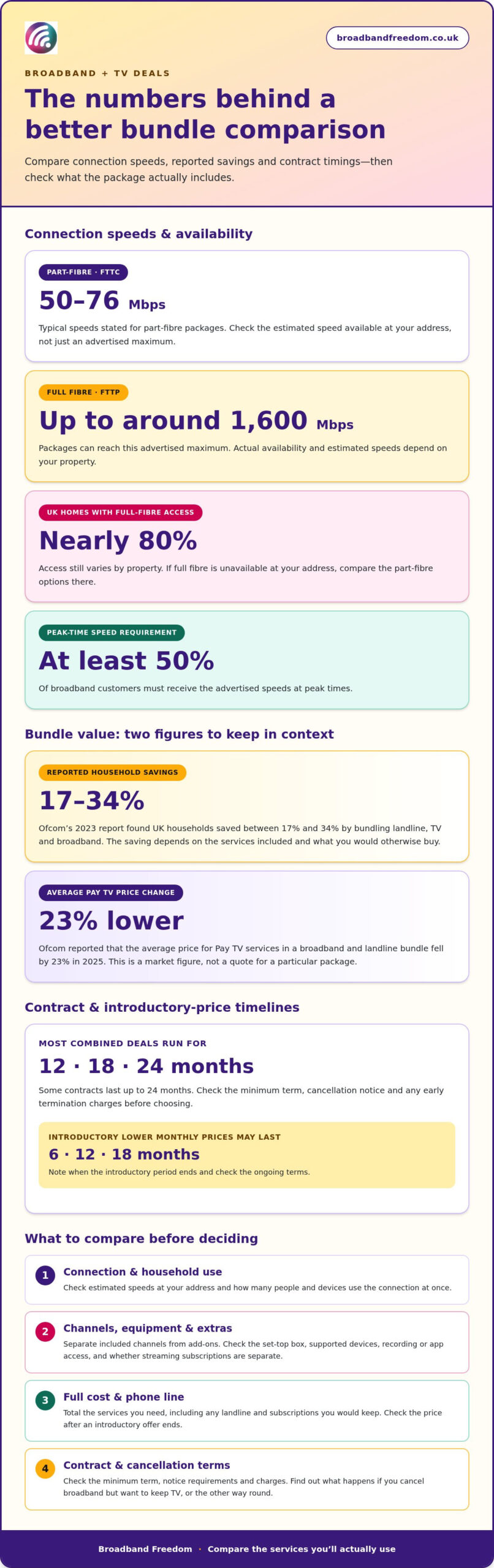
Part-fibre, also called FTTC, typically offers speeds of 50-76Mbps. Full fibre, or FTTP, packages can provide speeds of up to around 1,600Mbps. These are different connection types, so compare the speed available at your home, not just the advertised maximum. At least 50% of broadband customers must receive advertised speeds at peak times. Ofcom’s broadband coverage and speed information explains how to assess availability and performance.
Coverage is another deciding factor. Nearly 80% of UK homes have access to a full-fibre network, but availability still varies by property. Use Ofcom’s postcode availability checker to see which network types reach your address. If full fibre isn’t available, compare the part-fibre options offered there instead.
Choose a speed that suits how your household uses the connection. One person browsing and streaming has different needs from a family gaming, making video calls and streaming in several rooms. Consider how many people use the internet at once, then compare the available estimated speeds. A faster option is most relevant when several devices need a stable connection simultaneously.
Next, match the TV line-up to your viewing habits. List the channels your household watches, then check which are included or available as add-ons. Sports fans might prioritise TNT Sports, while another household may prefer entertainment or children’s channels. Compare the package details against your list to assess the channels alongside the broadband connection.
What is a broadband and TV package deal?
A broadband and TV package combines home internet with a television service. Some deals also include a phone line, so compare each package’s services, equipment and contract terms.
Providers, packages and included features
UK providers group broadband with different TV services, channel line-ups and optional extras. Compare the exact package contents, not just its name. For a listing labelled Pro 3, check the stated broadband service and which TV channels or features come with it. BT TV packages also need a close look: review the available channels and included features against your household’s viewing habits.
Before choosing, note which services are included and which need a separate subscription. Netflix, for example, may be a separate subscription rather than part of the TV package. Check whether any listed credit or incentive applies to the package you want and whether you would use it. The key is to compare the services you’ll actually watch and use.
Equipment, incentives and optional channels
Check what equipment comes with the TV service and how it connects to your devices. See whether a set-top box is included, how many devices it supports, and whether recording or app access is part of the offer. These details can affect how well the service fits your home set-up.
Then distinguish included channels from optional channel packages. A sports add-on, for example, may suit a household that follows live fixtures, but be unnecessary for others. Note any introductory incentive, such as account credit, and when it applies. Compare the offer’s conditions with the channels and equipment you expect to use during the contract.
Contract lengths and cancellation terms
Most combined TV and broadband deals run for 12, 18 or 24 months, and some contracts last up to 24 months. Check the minimum term before signing. Some bundles offer a lower monthly price for the first six, 12 or 18 months, so note when that introductory period ends and what the ongoing terms say.
Cancellation depends on the contract’s terms. Before ordering, find the notice requirements, any early termination charges, and what happens if you cancel broadband but want to keep TV, or vice versa. If you’re comparing package options, use broadband deal comparisons to weigh the services and terms together.
Comparing bundled services with separate subscriptions
To compare value, total the services you need separately, then set that amount against a combined deal. Include broadband, television, any landline and subscriptions you’d keep, such as streaming or cinema services. Ofcom’s 2023 report found UK households saved between 17% and 34% by bundling landline, TV and broadband. The saving depends on the services included and what you’d otherwise buy.
Bundle value versus separate services
Treat this as a market average, not a quote for a particular package. Ofcom reported that the average price for Pay TV services in a broadband and landline bundle fell by 23% in 2025. Compare current package details rather than assuming older prices or channel line-ups still apply.
Make the comparison concrete: list each service, its monthly cost and any add-ons. Then subtract subscriptions the bundle would replace. This helps you see whether combining services offers useful value or simply groups things you would not choose separately.
What broadband and TV bundles include
A bundle usually combines an internet connection with a TV service, and some also include a landline. Check which channels are included, whether streaming subscriptions are separate and whether add-ons cost extra. A full-fibre bundle pairs TV with a full-fibre connection where available, but the connection type does not determine the TV line-up.
Before switching, list the services your household uses, including phone calls, streaming and live television. Compare them with the bundle’s inclusions. This can reveal gaps, such as a streaming subscription you’ll still need, or channels nobody in your household watches.
Virgin Media prices and Full Fibre bundles
When comparing a Virgin Media bundle, weigh its monthly charge against the connection, channels and add-ons. Consider whether these services replace subscriptions you already pay for. A bigger channel selection does not automatically offer better value if your household watches only a few programmes.
With a full-fibre bundle, assess the broadband connection and TV options separately. Compare the services you’ll use with separate subscriptions, and include the contract terms in your decision. This makes it easier to compare different bundles without focusing on the headline package alone.
Comparing broadband, line and TV deals
Compare the connection, phone service and television separately before weighing up a combined deal. “Line” can mean a home phone service or the physical connection carrying broadband, and they are not always the same thing. Check what the package includes, what you’ll use and which services you would otherwise pay for separately.
Does your broadband need a phone line?
Start with the connection type. ADSL copper broadband needs a phone line, while full fibre and cable services do not. This matters when comparing broadband with a line-and-TV bundle: you may want a home phone, but your broadband connection might not need one. Check the package details for phone service, line rental and broadband as separate inclusions.
Next, list what your household actually uses. If you stream entertainment and rarely make landline calls, for example, compare broadband and TV with similar options that do not include a phone package. If family members still use a home phone, include that requirement in your comparison rather than treating the line as an automatic extra.
Compare the whole household set-up
Compare the monthly charge with the channels, broadband connection and any phone service. Then add the cost of subscriptions you’ll keep separately, such as streaming or a sports package. More entertainment options do not necessarily make a better fit if you already subscribe elsewhere. Compare the total services, not just the package name.
Consider whether a faster connection would meet a real need. Several people streaming or downloading at once may benefit from higher speeds, while lighter use may not. Match the connection to your household’s activity, then compare TV channels and phone features on equal terms. This keeps the decision focused on services you’ll use.
Some UK providers combine broadband, TV and a mobile plan, such as a package with an O2 SIM. Compare that structure with a home phone bundle: a mobile SIM won’t replace a landline for every household. To weigh broadband options against your needs, compare broadband deals alongside the TV and line services you want.
Broadband Freedom: Full Fibre Broadband Deals
Broadband Freedom helps you compare connection options once you know what your household needs. Consider Full Fibre Broadband Deals if you’re looking for a full-fibre connection, or compare Fibre Broadband Deals and Standard Broadband Deals against the options available at your address and your usage.
If you also need a home phone, compare Broadband and Phone Packages with broadband-only options. Focus on the services you’ll use, connection type and contract terms rather than choosing on headline speed alone. This gives you a clearer basis for comparing broadband costs separately from TV channels or streaming subscriptions.
As a practical next step, compare the available broadband options against your priorities. Visit broadbandfreedom.co.uk to explore the deals.
Make your next package choice with confidence
Let your household’s routine guide the final decision. Consider who uses the connection, which programmes matter and whether a phone line would be useful. Then compare packages against those priorities instead of paying for extras you won’t use. This is a practical way to assess broadband and TV deals in the UK.
Broadband Freedom offers Full Fibre Broadband Deals, Fibre Broadband Deals and Standard Broadband Deals, giving you different connection types to compare. Use your needs as the filter: choose a connection and estimated speed suited to everyday internet use, then look for TV options that match the channels and subscriptions you value.
Ready to take the next step? Compare broadband deals with Broadband Freedom and find an option that fits the way you use your home connection. A clear set of priorities can make the choice feel much simpler.
Frequently Asked Questions
Can I get broadband and TV without a phone line?
Yes, some broadband and TV packages are available without a phone line. ADSL copper broadband needs one, while full-fibre and cable connections do not. If you do not use a home phone, focus on packages without one. Check the connection type and whether the advertised package includes a landline, as broadband and phone services are separate features.
How much do UK broadband and TV bundles cost per month?
Monthly costs depend on broadband speed, TV channels, contract terms and add-ons. To compare fairly, total the cost of services you would otherwise pay for separately, including streaming subscriptions you’ll keep. Note whether a bundle has an introductory price and when it ends. The headline charge alone may not show the ongoing cost or the value of channels your household watches.
Which UK providers offer broadband and TV bundles?
Virgin Media and BT are examples of providers with broadband and TV options, but packages and availability vary. Compare the specific connection, channel line-up and additional services rather than relying on provider names alone. Broadband Freedom’s comparison platform brings together broadband, phone and TV packages from multiple UK providers, making it easier to view relevant options side by side.
What broadband speeds and TV channels are included in each bundle?
Speeds and channels depend on the package and what is available at your address. Check the estimated broadband speed, then compare the channel list with your viewing habits. A household that regularly watches sport, for example, may value different channels from one focused on films or children’s programmes. Check whether the channels you want are included or offered as paid add-ons.
Are there setup fees, equipment costs, or price rises in UK broadband and TV contracts?
Terms vary between packages. Before choosing, read the deal details for any installation charge, equipment cost, introductory offer and changes to the monthly charge during the contract. Check whether equipment is supplied, rented or optional, and whether it must be returned if you leave. Comparing these terms with the recurring charge gives you a clearer picture of the commitment.
Can I get broadband and TV deals at my UK postcode?
Availability is postcode-specific because networks and package options vary by address. Enter your postcode into Broadband Freedom’s comparison service to see which connections and TV packages are available where you live. Nearby homes may have different network options, so a neighbour’s deal might not be available at your property. Compare the results for your address, including estimated speed, channels and contract terms.

Article by
Elaine Lang
Elaine has over 20 years across Marketing, Communications and Public Relations in the UK. She has worked across large UK corporations, including Commercial Banks and Airports, to online consumer finance and technology solutions. Elaine has post graduate qualifications in Marketing from the Chartered Institute of Marketing (CIM) and the Industry of Direct Marketing (IDM). She is a lifelong feline fan, sharing her home with around 4-6 cats for many years. This of course can be a challenge when trying to work at home, as they like to try to help!