Broadband and Phone Packages: The Complete 2026 UK Comparison Guide

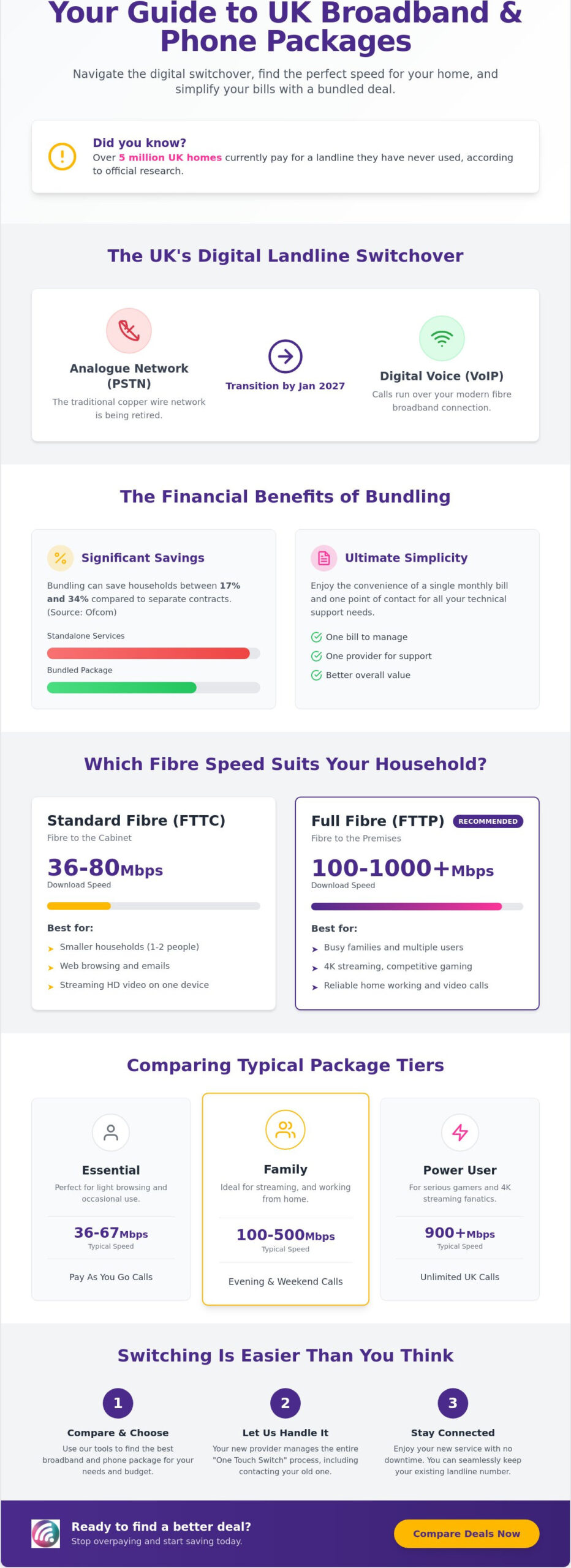
Over five million UK homes currently pay for a landline they have never used, according to official research. Finding the right broadband and phone packages shouldn’t be a source of stress, yet many consumers feel trapped by mid-contract price hikes and technical confusion. We agree that the current telecommunications environment feels unnecessarily complex. This guide promises to show you how to combine high-speed internet with reliable home phone services whilst reducing your monthly utility bills. You will discover how to manage the upcoming network changes and secure the most competitive rates available in the UK.
Expert Guidance on the Digital Transition
Industry experts emphasise the importance of acting now rather than waiting for the analogue network retirement. “The move to digital landlines is a necessary step to ensure the UK’s communication infrastructure remains resilient,” notes an Ofcom spokesperson. By following evidence-based advice from GOV.UK, you can manage these changes without losing service. We cite data from Ofcom to ensure our advice is grounded in verifiable research and official documentation.
Key Takeaways
- Prepare for the analogue network retirement by future-proofing your home with a modern Digital Voice setup.
- Match your household’s digital demands to the correct speed tier by comparing broadband and phone packages across Standard and Full Fibre options.
- Learn how to audit your call history to eliminate expensive “unlimited” plans that don’t align with your actual usage.
- Utilise the “One Touch Switch” system to move providers seamlessly whilst retaining your existing landline number.
Why Choose Broadband and Phone Packages in 2026?
Combining your connectivity needs into a single plan is the most efficient way to manage your home technology. Modern broadband and phone packages act as integrated digital communication solutions, ensuring your internet and voice services work in harmony whilst saving you money. You benefit from a single monthly bill and one point of contact for technical support, which removes the headache of dealing with multiple providers. A bundle is a commercial agreement that combines data and voice services at a discounted rate. This approach provides better value than purchasing these essential services separately. This trend towards unified services is also vital for the commercial sector, where specialists like Broadconnect provide integrated cloud communication and high-speed connectivity solutions tailored for businesses navigating the digital transition.
Understanding the UK’s Digital Switchover
The traditional Public Switched Telephone Network (PSTN) is currently being retired by Openreach. This industry-wide shift means analogue phone lines will no longer exist after January 2027. Modern phone services now run over your fibre connection using VoIP (Voice over Internet Protocol). According to Ofcom, the number of residential customers on the old PSTN fell to 3.2 million by July 2025. This transition is a key part of the evolving Internet in the United Kingdom, moving us toward a fully digital infrastructure.
The Financial Benefits of Bundling Services
Choosing these broadband and phone packages is often significantly cheaper than paying for standalone fibre and a separate mobile or landline service. Providers frequently offer “inclusive call minutes” as an incentive for customers who bundle, which can lead to substantial monthly savings. Ofcom research suggests that bundling can save households between 17% and 34% compared to individual contracts. If you want to dive deeper into how these costs are calculated, check our guide on Landline Rental Charges Explained. This streamlines your utilities and ensures you aren’t paying for redundant copper wire maintenance.
Comparing the Best Broadband and Phone Bundles for Your Home
Selecting the right broadband and phone packages starts with understanding your household’s digital appetite. Standard Fibre (FTTC) typically delivers speeds between 36Mbps and 80Mbps, which is often sufficient for smaller homes. If you have multiple people streaming in 4K or gaming online, Full Fibre (FTTP) offers superior performance ranging from 100Mbps to 1Gbps. High upload speeds are particularly vital for remote workers. If you are using your connection to work for yourself, PurePay Hub provides a complete guide to starting as a sole trader. These high speeds ensure your video connection remains stable whilst you are on a call. Beyond data, you should choose a voice plan that matches your habits, such as Pay As You Go, Evening & Weekends, or Unlimited UK Landline minutes.
Fibre vs Full Fibre: Which Speed Suits Your Household?
FTTC relies on older copper wires for the final part of the connection, whereas FTTP uses fibre optic cables directly to your premises. This distinction is critical for phone service stability. A multi-device home often requires at least 100Mbps to handle simultaneous 4K streaming and VoIP calls without lag. You can check your current performance to see if your existing setup meets these modern demands. Recent government action on surprise bill hikes ensures clearer pricing, making it easier to budget for these necessary upgrades.
Standard Landline vs Digital Voice Technology
Digital Voice is simply the brand name many major providers use for VoIP technology. Most existing handsets remain compatible with the new system, though you might need a simple adapter to plug into your router. One key difference involves power outages; unlike old analogue lines, digital phones won’t work during a power cut without a battery backup. For those seeking the best value, it’s worth taking a moment to compare broadband deals to find a bundle that includes these modern features as standard. This ensures you stay connected regardless of the hardware shift.
| Package Tier | Best For | Typical Speed | Typical Call Plan |
|---|---|---|---|
| Essential | Light browsing | 36-67Mbps | Pay As You Go |
| Family | Streaming & WFH | 100-500Mbps | Evening & Weekends |
| Power User | Gaming & 4K | 900Mbps+ | Unlimited UK Landline |
Navigating Call Plan Options and Call Features
Audit your usage before signing a new contract. Many households overpay for “Unlimited” minutes they never actually exhaust. Review your last three statements to see when you actually use the landline. Look at your last three bills. If you primarily make calls in the evening, an “Anytime” plan is an unnecessary expense. Families with relatives abroad should look for specific international add-ons whilst comparing deals. Modern broadband and phone packages frequently include digital features like Caller Display and Anonymous Caller Rejection at no extra cost. These tools help you manage nuisance calls effectively.
Choosing the Right Call Plan for Your Usage
Analyse the true value of Anytime plans compared to Evening and Weekend options. One common trap is the exclusion of mobile numbers from inclusive minutes. Always check the small print to see if calling a mobile costs extra. If you genuinely don’t need a handset at all, you might prefer Broadband Without a Phone Line. This path allows you to focus your budget purely on data speeds. Making an informed choice here prevents you from subsidising a service you don’t intend to use.
Avoiding Hidden Costs and Mid-Contract Hikes
Prepare for annual price increases. Most major UK providers implement a price rise every April, usually based on the Consumer Price Index (CPI) plus an additional 3.9%. This practice is a standard industry behaviour, but it can lead to “bill shock” if you aren’t expecting it. According to Ofcom guidelines, providers must be transparent about these terms. Staying “out of contract” is the primary reason for high bills, as monthly costs often spike once your initial term expires. To secure a fair rate on broadband and phone packages, compare broadband deals and switch before your current deal ends.
How to Switch and Save on Your Combined Deal
Switching your broadband and phone packages is now simpler than ever thanks to regulatory improvements. You no longer have to endure awkward cancellation calls or navigate complex notice periods. Use our directory of Broadband Providers to identify companies offering the best incentives for your area. According to Ofcom, the One Touch Switch system has revolutionised the market by placing the administrative burden on the provider rather than the consumer. This ensures you can move to a cheaper deal with minimal effort.
The One Touch Switch Process Explained
Under Ofcom’s One Touch Switch rules, your new provider handles the entire transfer, ensuring minimal downtime whilst you move services. You only need to contact the new company; they will coordinate the cancellation with your current provider. This system includes robust “Loss of Service” protections. If your switch takes longer than one working day, you may be entitled to automatic compensation. This protection is a key part of Ofcom’s General Conditions, designed to give you peace of mind during the transition.
Keeping your existing number is a priority for many. Ensure you request “Number Porting” during the initial sign-up process. Do not cancel your old service yourself, as this can lead to the loss of your number. Follow this simple switch-day checklist:
- Connect your new router as soon as the activation signal arrives.
- Plug your existing handset into the router’s phone port using an adapter if required.
- Test the dial tone to confirm your Digital Voice service is active.
This structured approach prevents common setup errors and ensures a seamless transition between providers.
How to Use the Broadband Freedom Comparison Tool
Find the best broadband and phone packages by using our tailored filters. Visit the Compare Broadband Deals page and select the “Phone Included” option. Sort your results by “Effective Monthly Cost” to account for the total price over the contract term. This calculation includes setup fees and any promotional discounts. Check our list of Broadband with Free Gifts to see if you can claim extra value, such as shopping vouchers or tech hardware, which further reduces your net expenditure.
Secure Your Future Home Connection
Moving to a digital service represents a significant step toward a more reliable home setup. You now have the clarity needed to navigate the 2026 telecommunications landscape without decision fatigue. By selecting the right integrated bundles, you ensure your household remains connected through the final stages of the analogue retirement. As one industry expert notes, “The digital switchover is the most significant upgrade to our communications network in a generation.” This transition detailed in GOV.UK guidance ensures your home is ready for the future.
Expert Comparison Made Simple
We provide the expert guide you need by performing the heavy lifting of research. Our platform monitors daily updated offers from major providers like BT, Sky, and Virgin Media. You can compare options from over 30 UK providers in one place, allowing you to filter based on your requirements. This transparent approach aligns with Ofcom standards for fairness whilst securing the best terms for your household.
Take Control of Your Bills
Take action now to find a cost-effective solution for your internet and voice needs. Find the best broadband and phone packages for your home today and reclaim control over your utilities. Our expert advice on the 2026 digital switchover ensures you stay ahead of the curve with a connection you can trust. Staying connected has never been this simple.
Frequently Asked Questions
Can I keep my existing phone number when I switch broadband and phone packages?
You can keep your existing number through the porting process provided you follow the correct switching protocol. Under Ofcom switching rules, your new provider manages the transfer to ensure continuity. Do not terminate your old contract yourself, as this often results in the number being returned to the national pool and lost forever.
Do I still need a physical phone line for full fibre broadband in 2026?
Physical copper phone lines are becoming obsolete as Full Fibre (FTTP) networks expand across the country. Modern broadband and phone packages deliver voice services as data packets, meaning a dedicated analogue line is no longer required for connectivity. You can find more technical details on this infrastructure shift in Ofcom’s guide to the future of landline calls.
What is the difference between a landline and Digital Voice?
The difference lies in the transmission method; traditional landlines use electrical signals over copper, whilst Digital Voice uses your internet connection. Digital Voice is the industry-standard term for VoIP (Voice over Internet Protocol). It offers clearer sound quality and allows you to use your phone in any room with a Wi-Fi signal or Ethernet port, rather than being tethered to a specific wall socket.
Is it cheaper to have broadband and phone together or separately?
Bundling services is almost always more cost-effective than managing separate accounts for data and voice. Choosing broadband and phone packages allows you to access discounted “add-on” rates that aren’t available to standalone customers. This helps you avoid multiple connection fees and ensures your pricing remains transparent under a single provider’s terms, making it easier to track your monthly outgoings.
What happens to my home phone during a power cut with a digital package?
Your digital phone won’t function during a power cut because the router requires electricity to operate. For households with additional needs, Ofcom mandates that providers must offer a solution, such as a battery backup, to ensure access to emergency services. As one safety consultant notes, “Vulnerable users must ensure their provider is aware of their status to receive the necessary backup hardware.” You can find further safety details in the GOV.UK telecare guidance.

Article by
Elaine Lang
Elaine has over 20 years across Marketing, Communications and Public Relations in the UK. She has worked across large UK corporations, including Commercial Banks and Airports, to online consumer finance and technology solutions. Elaine has postgraduate qualifications in Marketing from the Chartered Institute of Marketing (CIM) and the Institute of Direct Marketing (IDM). She is a lifelong feline fan, sharing her home with around 4-6 cats for many years. This of course can be a challenge when trying to work at home, as they like to try to help!