Cheap Broadband UK 2026: Find the Best Value Deals for Your Home

The lowest monthly price on a comparison site often hides an expensive surprise waiting for you in April. Whilst you might be searching for cheap broadband UK to keep your household budget under control, a budget deal can quickly spiral once inflation-linked hikes and hardware delivery fees are added to the total. You likely feel frustrated by the lack of transparency in the industry; it’s exhausting to track which providers link their costs to the Consumer Price Index. We believe you deserve a connection that respects your autonomy and your wallet.
Discover how to slash your monthly bills by identifying the UK’s most genuine value deals whilst avoiding hidden 2026 price hikes. This guide simplifies your search by focusing on total contract costs rather than just the initial headline figure. We’ll show you how to aim for a reliable connection for under £25 per month without facing unexpected upfront charges. Learn how to navigate the simple switching process and find a package that fits your specific lifestyle requirements. It’s time to take control of your home connectivity and stop overpaying for essential services.
Key Takeaways
- Identify why “cheap” in 2026 refers to packages under £30 per month as Fibre replaces ADSL as the standard budget entry point.
- Discover how to find the most competitive cheap broadband UK deals by exploring aggressive pricing from emerging alternative networks.
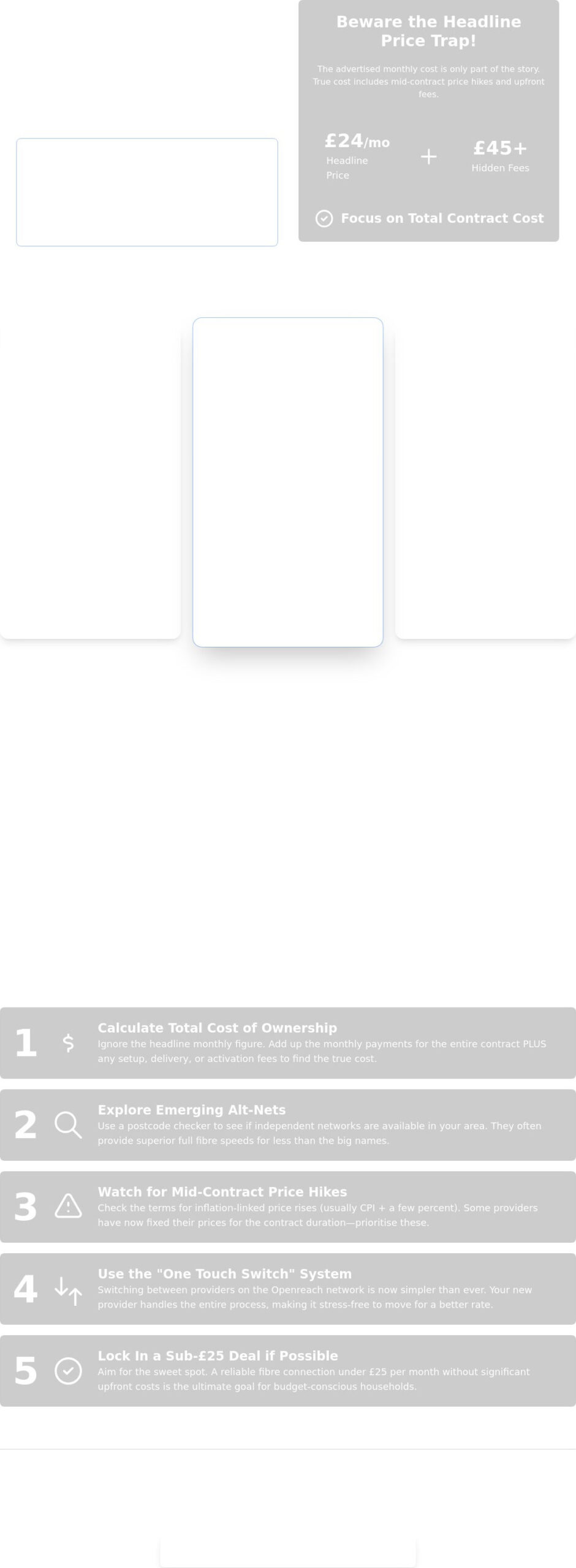
- Avoid the “headline price trap” by calculating the total cost of ownership, including hidden setup fees and mid-contract inflation hikes.
- Utilise the “One Touch Switch” system to move between providers effortlessly and secure a better rate without technical stress.
- Follow a practical 5-step process to lock in a reliable connection for under £25 per month whilst protecting your household budget.
What Defines Cheap Broadband in the UK for 2026?
Finding cheap broadband UK deals in 2026 requires a shift in perspective. Whilst you might be tempted by the lowest figure on a comparison table, the true definition of a budget deal has evolved alongside the national average. Currently, the average broadband bill for standard fibre sits between £24 and £35 per month. Consequently, we define a “cheap” package as any service priced below the £30 threshold. This benchmark allows you to secure a reliable connection without overstretching your household budget, provided you look beyond the initial marketing claims.
The Evolution of Budget Internet
The UK broadband infrastructure is undergoing its most significant transformation in decades. Traditional ADSL broadband deals are being phased out as the copper network reaches its retirement. This means entry-level Fibre, typically offering speeds between 35Mbps and 60Mbps, has become the new price floor for consumers. Increased competition amongst infrastructure providers in 2026 has actually helped stabilise these entry-level prices. You no longer have to settle for prehistoric speeds to save money; the market now offers fibre performance at what used to be ADSL prices.
Broadband vs. Value: Knowing the Difference
Understanding value means looking at your cost-per-Mbps. For example, a 100Mbps Full Fibre deal at £28 per month often represents better value than a 35Mbps standard fibre deal at £24. You’re paying slightly more, but the utility you gain for a busy household is exponentially higher. Slightly more expensive Full Fibre deals are frequently cheaper in the long run because they suffer from fewer technical faults and don’t require expensive engineer visits for legacy line repairs. At Broadband Freedom, we act as your advocate by filtering out the jargon. We help you compare broadband deals based on your actual lifestyle requirements rather than just the biggest speed numbers. This empowers you to make a choice that balances your financial constraints with the need for a seamless digital life.
Comparing Cheap Broadband Types: From Standard Fibre to Alt-Nets
Choose between three distinct technology tiers to secure the best cheap broadband UK deal for your home. Whilst the largest national providers dominate the headlines, a new generation of independent networks is rewriting the rules of affordability. You can currently select from standard Fibre-to-the-Cabinet (FTTC), Full Fibre (FTTP), or mobile-based 5G home broadband. Opting for a “Broadband Only” package is often the most pragmatic way to save money. These deals strip away the unnecessary costs of traditional landlines and TV bundles that many households no longer require. If you are receiving government benefits, check your eligibility for social tariffs for broadband to access a fixed, low-cost safety net.
The Rise of the Alt-Nets
Investigate Alternative Networks (Alt-Nets) to find prices that frequently undercut the national giants. These independent fibre providers build their own infrastructure rather than relying on the Openreach network. Because they are often smaller and more agile, they offer aggressive pricing to gain market share in specific regions. Alt-Nets frequently provide symmetrical upload and download speeds, which is a significant advantage for gamers and remote workers. You must verify local availability first. Many of these providers focus on specific urban centres, so their cheap broadband UK offers may not be available in every postcode just yet.
Fibre-to-the-Cabinet (FTTC) vs. Full Fibre (FTTP)
Distinguish between FTTC and Full Fibre to match your speed to your actual household usage. If terms like FTTC and FTTP feel confusing, our broadband jargon buster explains every key UK internet term in plain English. FTTC remains the most common “cheap” option, typically providing speeds around 35Mbps. This is perfect for individuals or couples who primarily stream in HD and browse the web. However, Full Fibre (FTTP) is rapidly catching up in price and reliability. A 100Mbps Full Fibre connection is now the recommended standard for small households with multiple devices connected simultaneously. Use an online tool to compare broadband deals and see which specific technology has reached your street.
Consider 5G home broadband if you require an immediate, contract-flexible setup without an engineer visit. With prices for 5G typically ranging from £20 to £40 per month, it serves as a viable budget alternative for renters or those in short-term accommodation. It offers the freedom to get online instantly by simply plugging in a router. This flexibility ensures you maintain control over your digital life without being tied to a fixed-line installation that might not suit your current living situation.
Avoiding the Headline Price Trap: Hidden Costs to Watch Out For
“Why did my bill go up after six months?” This is the most common question from frustrated consumers who feel misled by their service provider. When you search for cheap broadband UK, you’re usually presented with a ‘teaser’ rate. This price is designed to get you through the door, but it rarely represents the total amount you’ll pay over the contract term. Many providers rely on complex pricing structures that penalise loyalty and hide the true cost of the service behind attractive marketing. You deserve a clear understanding of what you’re actually signing up for.
The “Loyalty Penalty” remains a significant factor in the UK telecommunications market. Once your initial contract period ends, your monthly rate can jump by as much as 50% or more. Providers often bank on you forgetting to switch or feeling overwhelmed by the process. To protect your autonomy, always set a calendar reminder for two months before your contract expires. This gives you enough time to research new deals or renegotiate with your current provider. For a complete step-by-step strategy, our guide on what to do when your broadband contract ends walks you through exactly how to avoid the loyalty penalty and secure a better rate. It’s the simplest way to ensure you don’t pay more than necessary for your connection.
The CPI + 3.9% Problem Explained
Inflation-linked price hikes are a standard industry practice where providers increase your monthly bill every April based on the Consumer Price Index plus an additional fixed percentage. For example, a hypothetical industry deal that starts at £20 per month can easily climb towards £24 by the end of a 24-month term due to these compounding annual increases. Whilst this is common amongst many large providers, some companies distinguish themselves by offering “Fixed Price” guarantees. These contracts ensure your monthly rate stays exactly the same from the day you sign until the day the contract ends. We recommend looking for these specific terms if you prefer predictable household budgeting and want to avoid the 2026 price hike cycle.
Setup Fees and Hidden Extras
Headline prices often ignore the immediate costs required to get you online. You should watch out for several common “hidden” extras that can inflate your first-year expenditure:
- Activation Fees: A one-off charge to turn on your service at the exchange.
- Router Delivery: The cost of shipping your hardware to your home.
- Paper Billing Fees: Extra monthly charges if you don’t use digital statements.
Before you sign up for a faster tier, check internet speed at your property to ensure your local infrastructure can actually support the bandwidth you’re paying for. Paying for an “Ultrafast” package is a waste of money if your local cabinet limits you to standard fibre speeds. According to Ofcom consumer guidance, providers must be transparent about these costs and your rights as a customer. Being aware of these traps ensures that your cheap broadband UK deal remains genuinely affordable throughout the entire duration of your contract.
How to Secure the Cheapest Broadband Deal Today
Securing a cheap broadband UK deal is more straightforward than it used to be thanks to recent regulatory improvements. The “One Touch Switch” system removes the burden of coordinating between two different companies. Your new provider now handles the entire transition, including the cancellation of your old service. This ensures you aren’t left without a connection or paying for two separate services simultaneously. To maximise your savings, look for broadband with free gifts. Incentives like bill credits or retail vouchers can effectively lower your monthly outlay by offsetting the initial cost of the contract.
Step-by-Step Switching Guide
Follow this 5-step process to lock in the best rate for your home:
- Audit your speed needs: Use a speed test to see what you actually use. Don’t pay for 500Mbps if your household only requires 60Mbps for streaming and browsing.
- Calculate total cost: Use a comparison tool to find the lowest “Total Contract Cost”. This includes all monthly payments plus any setup or delivery fees.
- Hunt for incentives: Check for “New Customer” incentives. Many providers offer Amazon vouchers or pre-paid cards that can be worth up to £100.
- Verify the term: Match the contract length to your living situation. Avoid long-term commitments if you plan to move house within the year.
- Trigger the switch: Once you find a deal, sign up online. Your new provider will manage the technical move and notify your current supplier.
Social Tariffs and Student Discounts
Specific support is available for low-income households through social tariffs. If you receive Universal Credit, Pension Credit, or similar benefits, you qualify for these specialised plans. These deals are typically fixed-price and often cost under £15 per month. They provide a vital safety net against the annual price hikes discussed in previous sections. Because these rates are protected, they remain affordable even when standard market prices rise.
Students should prioritise flexibility over the lowest headline price. A standard 24-month contract often leads to expensive exit fees when you move out at the end of the academic year. We recommend no-contract broadband for those in temporary or term-time accommodation. It offers the freedom to cancel whenever you need without facing financial penalties. This pragmatic approach ensures you only pay for the months you actually spend in your student house. Ready to find your next plan? Compare broadband deals today to see how much you could save.
Why Broadband Freedom is Your Advocate for Better Value
Broadband Freedom isn’t just another comparison site. We act as your savvy guide in an industry that often thrives on confusion. Whilst others focus on peak performance metrics that rarely match real-world usage, we prioritise your autonomy. We’ve done the heavy lifting of researching the market to find the most genuine cheap broadband UK deals available in 2026. This means you can stop worrying about technical specifications and focus on what matters; a reliable connection that fits your budget. We believe in liberation from the complex pricing structures used by traditional industry giants.
Our facilitator role is built on the foundation of transparency. We recognise that finding a value connection shouldn’t feel like a full-time job. We aim to reduce the decision fatigue that comes with browsing dozens of near-identical offers. Our platform presents information in a direct, highly functional format. We lead with action-oriented facts that signal immediate benefits to you. This structured approach ensures that the path from your initial enquiry to a successful switch is as frictionless as possible. We stand in contrast to the perceived rigidity of traditional giants by remaining agile and attentive to your requirements. By putting your needs first, we establish a relationship based on mutual respect rather than a top-down service dynamic.
Pragmatic Comparison for Real People
We understand that your choice is driven by lifestyle constraints, not just megabits. Our platform filters out the marketing jargon to show you the pragmatic truth about every offer. We compare a wide variety of broadband providers, from the national giants to the agile Alt-Nets discussed in earlier sections. Our commitment to transparency means we highlight the details that others often hide. We show you the actual length of a contract and the specific timing of any scheduled price hikes. You deserve to know exactly what you’ll pay in month eighteen, not just month one. This clarity allows you to plan your household finances with total confidence.
Final Steps to Saving
Taking control of your household budget starts with a simple decision to stop overpaying for essential services. Switching your provider is no longer the logistical nightmare it used to be. It often takes as little as 15 minutes to find a better deal, yet it can save you hundreds of pounds over the course of a single contract. Don’t wait for your current provider to increase your bills again next spring. Perform an immediate postcode check to see the latest budget offers for 2026. Finding a cheap broadband UK deal is the first step toward a more efficient and affordable digital life. Compare broadband deals now and reclaim your financial freedom today.
Take Control of Your Home Connectivity Today
You now have the pragmatic tools needed to manage your home internet with total confidence. Remember that the headline price is often a trap; prioritise the total contract cost to ensure your household budget remains protected. By looking beyond the “Big Six” and exploring agile alternative networks, you can secure a connection that offers better reliability for a lower monthly outlay. Whether you require dedicated support for specialised student tariffs or are eligible for a fixed-price social tariff, a better deal is within reach.
Finding cheap broadband UK deals doesn’t have to be a source of decision fatigue. We’ve performed the heavy lifting by comparing over 50+ UK providers to show you the most transparent options available. Our expert guide is designed to help you sidestep inflation-linked hikes and hidden setup fees. Switching is a simple, 15-minute process that empowers you to reclaim your financial autonomy. Stop overpaying for your essential services. Find the cheapest broadband deals in your area today and enjoy the relief of a simple solution to your connectivity needs.
Frequently Asked Questions
How can I get broadband for £15 a month in the UK?
You can access this price point primarily through social tariffs if you receive government benefits such as Universal Credit or Pension Credit. Some alternative networks also offer aggressive introductory rates for new customers that hit this low threshold during promotional cycles. Always calculate the total contract cost to ensure the price doesn’t jump significantly after the first year. These budget options provide an essential safety net for households looking to minimise their monthly outgoings whilst maintaining a reliable connection.
Is cheap broadband good enough for working from home?
Yes, provided your package offers at least 35Mbps and a stable fibre connection. A standard fibre connection is perfectly adequate for video calls, email, and cloud-based tasks for a single user. You don’t need the most expensive gigabit plan for a productive home office. Focus on finding a deal with reliable uptime and low latency rather than chasing the highest possible download speeds to ensure your professional tasks remain uninterrupted throughout the working day.
What is the cheapest broadband provider in the UK right now?
The provider offering the lowest rate changes frequently based on regional availability and current promotional cycles. Smaller alternative networks often provide the most competitive cheap broadband UK rates in specific urban centres where they own the infrastructure. Amongst the national providers, companies like Vodafone and TalkTalk frequently compete for the budget-friendly market share. Use a postcode comparison tool to see which local provider is currently undercutting the national average in your specific street.
Can I get cheap broadband without a credit check?
Yes, you can opt for mobile-based 5G home broadband or specific no-contract deals that skip the traditional credit screening process. Many mobile providers offer routers with rolling monthly terms that don’t require a hard credit check. This is a pragmatic solution for renters or those with a limited credit history. It allows you to get online immediately without the rigid requirements and long-term commitment of a standard 24-month fibre contract.
What happens to my “cheap” deal when the contract ends?
Your monthly bill will likely increase significantly as you transition to the provider’s standard “out-of-contract” rate. Providers bank on customers staying on these expensive default rates once the initial incentive period expires. This is often referred to as the loyalty penalty. Set a reminder to switch or renegotiate your cheap broadband UK deal at least 60 days before your current term concludes to maintain your savings and avoid unnecessary price hikes. Our 2026 action plan for when your broadband contract ends gives you a clear, step-by-step process to follow so you never pay the out-of-contract rate again.
Are there cheap broadband deals for pensioners or those on benefits?
Yes, these are known as social tariffs and are specifically designed to provide low-cost, high-quality internet to eligible households. Most major providers offer these plans to those receiving Pension Credit, Universal Credit, or other similar support. These deals are usually exempt from annual mid-contract price hikes and offer a fixed, affordable rate. Contact your preferred provider directly to ask about their specific social tariff requirements and confirm your eligibility criteria.
Does “cheap” broadband include a landline?
Most modern budget deals are “broadband only” and do not include a traditional copper landline as standard. Removing the line rental for a phone you don’t use is one of the most effective ways to lower your monthly bill. If you still require a home phone, you can often add a digital voice service for a small additional fee. This transition is part of the wider national move away from legacy copper infrastructure toward a fully digital network.
Can students get cheap broadband for only 9 months?
Yes, specific student deals are available on shorter terms, or you can choose a no-contract plan for maximum flexibility. Traditional 24-month contracts are rarely suitable for the academic year and can lead to expensive exit fees. Look for providers that offer 9-month or 12-month student specials during the autumn term. Alternatively, a rolling monthly plan ensures you can cancel the service when you move out for the summer without facing financial penalties or paying for unused months.

Article by
Elaine Lang
Elaine has over 20 years across Marketing, Communications and Public Relations in the UK. She has worked across large UK corporations, including Commercial Banks and Airports, to online consumer finance and technology solutions. Elaine has post graduate qualifications in Marketing from the Chartered Institute of Marketing (CIM) and the Industry of Direct Marketing (IDM). She is a lifelong feline fan, sharing her home with around 4-6 cats for many years. This of course can be a challenge when trying to work at home, as they like to try to help!