Cheapest Internet Provider: How to Find the Best UK Broadband Deals in 2026

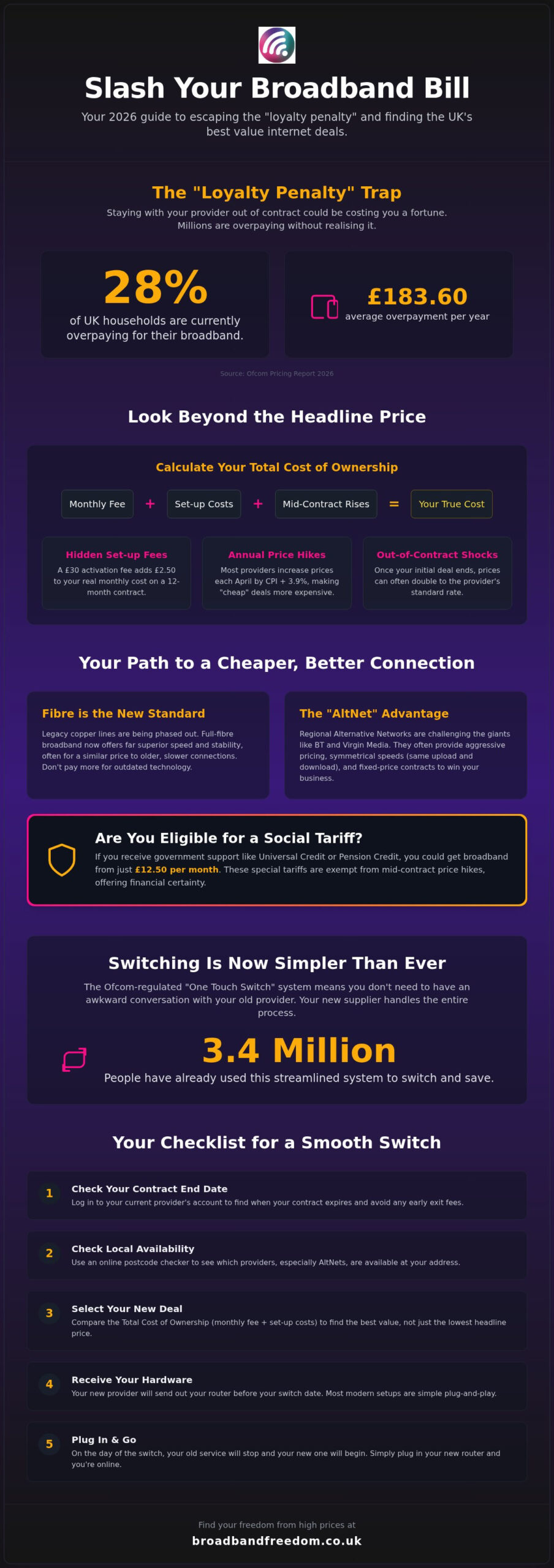
Did you know that 28% of UK households are currently paying a “loyalty penalty” simply for staying with their current provider? Data from the Ofcom Pricing Report 2026 shows that millions are out of contract and overpaying by an average of £183.60 every year. It’s frustrating to deal with confusing set-up fees or the nagging fear that picking the cheapest internet provider might mean settling for slow speeds. You deserve a reliable service that fits your budget without the stress of hidden costs.
Reclaim control of your household budget by identifying the UK’s most competitive deals. This guide provides a clear strategy to slash your monthly bills and secure a high-quality connection for under £25. Learn how to use the “One Touch Switch” system, which Ofcom reports has already empowered 3.4 million people to move providers with ease. We’ll also break down the new rules requiring price hikes to be stated in pounds and pence, ensuring your total contract costs remain transparent whilst you organise your finances.
Key Takeaways
- Define value by calculating the Total Cost of Ownership, balancing monthly fees with set-up costs and contract duration.
- Avoid unexpected bills by identifying “hidden” activation fees and understanding how fixed price hikes impact your long-term budget.
- Simplify your move to the cheapest internet provider using the “One Touch Switch” system, where your new supplier manages the entire transition.
- Maximise savings by considering bundled broadband and phone packages or flexible student deals that offer better value than standalone plans.
Identifying the Cheapest Internet Provider in the UK for 2026
Finding the cheapest internet provider in 2026 requires looking beyond the headline price. You must calculate the Total Cost of Ownership (TCO), which includes monthly rentals, activation fees, and contract length. Savvy consumers now look to “AltNets” (Alternative Networks). These providers often bypass traditional infrastructure to offer aggressive introductory rates that undercut established giants. By focusing on your specific usage, you avoid paying for bandwidth you don’t need.
Fibre vs Standard Broadband: Which is Cheaper?
Copper-based ADSL is no longer the budget king. Maintaining legacy lines is expensive; consequently, Best Fibre Broadband Offers 2026 have become the modern baseline. As the Internet in the United Kingdom evolves toward a full-fibre future, providers are phasing out standard connections. Fibre provides better stability for a similar price, ensuring you don’t pay more for a slower, outdated service.
Social Tariffs: Broadband from £12.50 per Month
If you receive government support, you could access the absolute lowest market rates. Social tariffs are specifically designed for households on Universal Credit, Pension Credit, or Income Support. Despite these deals starting from around £12.50, Ofcom data suggests millions of eligible households are missing out. These plans are exempt from mid-contract price hikes, providing a rare level of financial certainty for those on tight budgets.
The AltNet Pricing Advantage
Regional “AltNet” providers are currently driving down costs to compete with BT and Virgin Media. These specialists often provide symmetrical speeds and fixed pricing. Since January 2025, Ofcom regulations require all price increases to be stated in pounds and pence. This transparency helps you avoid the “loyalty penalty” that often plagues customers of larger, more traditional firms.
The Hidden Costs of “Cheap” Broadband Deals
Headline rates often mask the true expense of a connection. When searching for the cheapest internet provider, you’ll likely encounter activation fees or router delivery charges. A £30 set-up fee spread over a 12-month contract actually adds £2.50 to your real monthly spend. These upfront costs can inflate your first bill significantly. You should also watch for “free” hardware that carries hidden postage costs.
Understanding Mid-Contract Price Rises
Most major UK providers implement annual price hikes every April. These are typically calculated using the Consumer Price Index (CPI) plus an additional 3.9%. This means a “cheap” deal signed in January could become more expensive just three months later. Ofcom’s latest research indicates that performance consistency is vital, yet these price increases happen regardless of service quality. To protect your budget, Compare Broadband Deals that offer fixed-price guarantees.
Set-up Fees and Hardware Costs
The “loyalty penalty” remains a significant issue for UK consumers. Once your introductory period ends, prices often skyrocket to standard rates, which can be double the initial offer. Check your current “Out of Contract” status immediately to avoid these immediate doublings. Switching to a new cheapest internet provider is the most effective way to reset these introductory benefits. It’s often helpful to browse the latest offers to ensure your current provider isn’t overcharging you for a legacy service.
How to Switch Providers and Secure a Better Deal
Switching to the cheapest internet provider has never been simpler. The “One Touch Switch” process, regulated by Ofcom, ensures your new provider manages the entire cancellation with your current supplier. You don’t need to make awkward phone calls to retention departments anymore. According to Ofcom data, over 3.4 million UK consumers have already used this streamlined system to lower their bills. This regulation removes the stress of overlapping contracts and ensures you aren’t paying for two services at once. It’s a modern, frictionless way to reclaim your household budget.
The 5-Step Switching Checklist
- Check your end date: Avoid early exit fees by knowing when your current contract expires.
- Check availability: Use a Full Fibre Broadband Checker to find the best local deals.
- Select your deal: Compare total costs rather than just the monthly headline rate.
- Receive your hardware: Your new supplier will send out your router before the activation date.
- Go live: Your new service starts automatically; your old one is cancelled for you.
Timing Your Switch for Maximum Savings
Timing is everything. Providers often launch their most competitive introductory rates during Black Friday and New Year sales. If you’re out of contract, switching every 12 to 18 months keeps you on “New Customer” rates rather than paying the loyalty penalty. Industry experts suggest that switching is almost always more effective than haggling with your current supplier’s customer service team. You get access to the latest hardware and better speeds for a lower monthly outlay. To see today’s most competitive rates, compare the latest broadband offers and start saving immediately.
Value-Added Packages: When “Cheap” Includes More
Sometimes the cheapest internet provider isn’t the one selling standalone broadband. You’ll often find that Broadband and Phone Packages offer better overall value. Providers use these bundles to lower the individual service costs for loyal customers. Always factor “Free Gifts” like vouchers or tech into your “Effective Monthly Cost” calculation. If a deal includes a £100 voucher, it effectively reduces your monthly spend over the first year. This pragmatic approach ensures you see the true value beyond the headline price. It’s about being savvy with your total household outgoings.
Student and No-Contract Flexibility
Standard 24-month contracts are often a financial burden for renters or students. Choosing No Contract Broadband might involve a slightly higher monthly fee, but it saves you from massive exit fees later. Students should specifically look for 9-month plans to avoid paying for internet during summer holidays. This tailored approach prevents wasted expenditure on an empty property. It’s about finding the cheapest internet provider for your specific circumstances, not just the lowest market rate. Don’t be tied down by rigid industry standards if they don’t suit your lifestyle.
Bundling TV and Mobile for Extra Savings
Quad-play deals are the defining budget trend for 2026. These packages combine broadband, TV, phone, and mobile into one monthly bill. This creates “Convergence Savings,” where the total cost is significantly lower than paying four separate suppliers. You often receive exclusive mobile data boosts or premium channel access as a bonus. Use a comprehensive comparison tool to filter these options by your lifestyle needs. It simplifies your finances and maximises your household savings. To find the best fit, compare up to 30 UK providers today and secure a deal that actually works for you.
Take Control of Your Broadband Budget Today
Secure the best value by looking beyond introductory prices. You’ve learned how to identify hidden set-up fees and how the One Touch Switch system simplifies the moving process. Genuine savings come from understanding the Total Cost of Ownership over your full contract term rather than just chasing the lowest headline rate. Whether you need the flexibility of a no-contract plan or the deep savings of a social tariff, the power is now in your hands.
Don’t let the loyalty penalty drain your bank account. Take advantage of our daily updated UK offers and expert switching advice to find a deal that fits your lifestyle. We do the heavy lifting by letting you compare 30+ providers in seconds. Find the cheapest internet provider for your home now and enjoy a reliable connection without the financial stress. You’re just a few clicks away from a fairer, faster, and more affordable digital life.
Frequently Asked Questions
Which UK broadband provider is the cheapest in 2026?
Identifying the single cheapest internet provider depends on your location and eligibility for social tariffs. Currently, alternative network providers (AltNets) lead the market with aggressive introductory pricing. For households receiving government support, social tariffs from major suppliers offer the absolute lowest guaranteed rates. Always calculate the total contract cost, including activation fees, to ensure you are getting the best value for your home connection.
Can I get broadband for £15 a month or less?
Yes, you can secure broadband for under £15 per month by selecting specific social tariffs or introductory AltNet offers. Community Fibre has previously offered full fibre speeds for £14 per month on 12-month terms. If you aren’t eligible for a social tariff, look for short-term promotional deals from regional providers. These often undercut national giants by focusing on specific infrastructure areas, helping you find the cheapest internet provider.
Are there broadband deals with no credit checks for those on a budget?
Several providers offer no-contract broadband deals that bypass traditional, rigorous credit checks. These plans are ideal for individuals with a thin credit history or those who prefer flexible, rolling monthly terms. Whilst these options might carry slightly higher monthly rentals than fixed-term contracts, they eliminate long-term financial commitments. You can find these flexible arrangements by filtering for no-contract options, allowing you to access the internet without a credit agreement.
Is it cheaper to get broadband without a landline?
Modern Full Fibre connections don’t require a traditional copper phone line, which often makes them cheaper than legacy ADSL packages. By opting for a broadband-only deal, you avoid paying for line rental you don’t actually use. However, some providers still bundle phone services at a discounted rate to attract new customers. Always compare the total monthly outlay of a bundle against a standalone fibre connection to find the most cost-effective solution.
What are the best cheap internet deals for students?
The best value for students usually comes from 9-month fixed-term contracts or flexible no-contract broadband deals. These specific plans prevent you from paying for internet during the summer holidays when you might be away from your term-time address. Look for providers that offer student-specific incentives, such as bill credit or vouchers, to lower the effective monthly cost. These tailored options ensure you only pay for connectivity during the academic year.

Article by
Elaine Lang
Elaine has over 20 years across Marketing, Communications and Public Relations in the UK. She has worked across large UK corporations, including Commercial Banks and Airports, to online consumer finance and technology solutions. Elaine has post graduate qualifications in Marketing from the Chartered Institute of Marketing (CIM) and the Industry of Direct Marketing (IDM). She is a lifelong feline fan, sharing her home with around 4-6 cats for many years. This of course can be a challenge when trying to work at home, as they like to try to help!